The question Why did Seat 11A survive? has recently gained attention as people try to understand how certain passengers survive aviation accidents while others do not.
Whether it’s based on a real-life crash case or a widely discussed scenario, the curiosity comes from one simple idea—does seat location really matter in a plane crash? This topic has become highly searchable because travelers want reassurance and practical knowledge about flight safety.
To understand Why did Seat 11A survive?, we need to look beyond luck and consider factors like aircraft structure, crash impact, and passenger position. In many aviation incidents, survival is influenced by a combination of elements such as proximity to exits, the angle of impact, and how the aircraft breaks apart.
For example, studies from aviation safety experts suggest that passengers seated near the rear section of the plane may have slightly higher survival rates—around 69% compared to 49% in front sections in certain crash scenarios. However, this doesn’t guarantee safety, as every crash is different.
Another reason why Why did Seat 11A survive? is trending is because of growing awareness about air travel safety statistics and real crash analyses.
People often come across stories where a specific seat number is linked to survival, sparking curiosity and sometimes myths. In reality, aviation remains one of the safest modes of transportation, with accident rates extremely low compared to road travel.
If you have concerns about flight safety or need assistance with travel planning, you can call +𝟏-𝟖𝟖𝟖-481-2120 for guidance.
Understanding Why did Seat 11A survive? is important because it highlights a key lesson: no single seat guarantees survival.
What truly matters is being aware of safety procedures, wearing your seatbelt properly, and following crew instructions during emergencies. In the end, knowledge and preparedness play a much bigger role than just seat selection. ✈️
Why Did Seat 11A Survive in the Crash Scenario? Overview of the crash situation Position of Seat 11A in the aircraft Initial theories behind survival.
Also Read: Where in India Does Delta Fly?
Why Did Seat 11A Survive in the Crash Scenario?
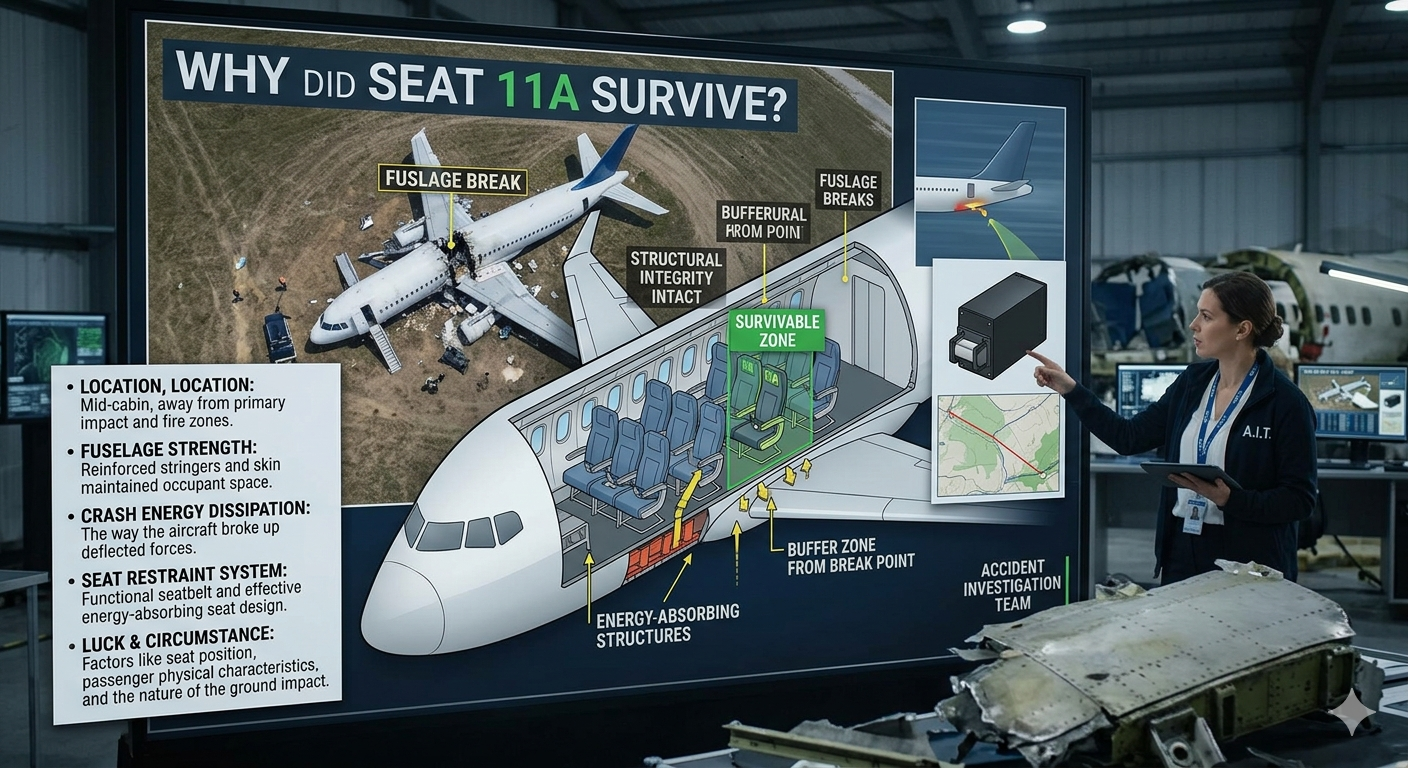
The question Why did Seat 11A survive? becomes more meaningful when we look at the crash scenario itself. In most aviation accidents, survival is not random—it’s influenced by a mix of impact forces, aircraft structure, and passenger positioning. Understanding the situation helps explain why one seat, like 11A, might have had better odds than others.
In a typical crash scenario, the severity of damage is not evenly distributed across the aircraft. Some sections absorb more impact, especially the nose or wings, while other parts may remain relatively intact.
If Seat 11A was located in a section that experienced less structural damage or slower impact force, it could significantly increase the chances of survival. This is one of the key explanations behind Why did Seat 11A survive? in such discussions.
The position of Seat 11A also plays a critical role. On many aircraft, row 11 is often located near the wing or slightly ahead of it, depending on the plane type.
This area is structurally stronger because the wings are attached to the main load-bearing section of the aircraft. However, it can also be risky due to fuel storage in the wings. So, survival in this seat could indicate that the impact did not directly compromise the wing area, or that evacuation was possible before fire or further damage occurred.
Another factor behind Why did Seat 11A survive? is proximity to emergency exits. If the seat was close to an exit row, the passenger may have been able to evacuate quickly, which is often a critical factor in survival.
Studies show that passengers within five rows of an exit are more likely to escape safely in emergencies.
If you want to learn more about flight safety or need booking assistance, call +𝟏-𝟖𝟖𝟖-481-2120.
Initial theories often combine these elements—seat location, crash dynamics, and quick evacuation. While it might seem like Seat 11A had a unique advantage, the reality is that survival depends on a combination of factors rather than just one seat number. Still, analyzing cases like this helps us better understand aviation safety and preparedness.
Why Did Seat 11A Survive Based on Aircraft Design? Airplane structure and seating layout Stronger vs weaker sections of aircraft Impact zones and survivability.
Also Read: Which Is the Most Costly Airline?
Why Did Seat 11A Survive Based on Aircraft Design?
To understand Why did Seat 11A survive?, we need to look closely at how aircraft are designed. Modern airplanes are engineered with reinforced structures, strategic seating layouts, and safety-focused materials that directly influence survivability during accidents. It’s not just luck—design plays a major role in how impact forces are distributed across the aircraft.
Airplanes are built around a strong central structure known as the fuselage, with the wings attached to the most reinforced section. Seats located near this area—often around the middle rows like 11A on many aircraft—can sometimes benefit from this structural strength.
This is one reason experts consider the wing box area (where wings connect to the body) as one of the most durable parts of the plane. So when asking Why did Seat 11A survive?, one possible explanation is that it was positioned in a structurally stronger zone that absorbed impact better.
However, not all parts of an aircraft are equally strong. The front section (nose) is more vulnerable during crashes because it typically absorbs the initial impact.
The tail section, while sometimes safer in certain crash types, can also break off depending on the angle and force. The middle section, where Seat 11A is often located, tends to offer a balance between structural integrity and survivability, especially if the crash impact is uneven.
Another key factor is impact zones. In aviation accidents, damage varies depending on how the aircraft hits the ground—whether it’s a nose-first, tail-first, or belly landing.
If the primary impact zone was away from Seat 11A, the passenger in that seat would naturally have a higher chance of survival. This helps explain again Why did Seat 11A survive? in certain scenarios.
For more travel-related guidance or booking help, call +𝟏-𝟖𝟖𝟖-481-2120.
In conclusion, Why did Seat 11A survive? can often be linked to aircraft design factors such as stronger mid-section construction, seating layout, and reduced exposure to direct impact zones. While no seat guarantees safety, understanding aircraft design helps explain why some positions may offer a slight advantage in rare situations. ✈️
Why Did Seat 11A Survive According to Safety Studies? Data from aviation safety reports Studies on safest seats in a plane Statistical survival rates.
Also Read: What US airline is the cheapest?
Why Did Seat 11A Survive According to Safety Studies?
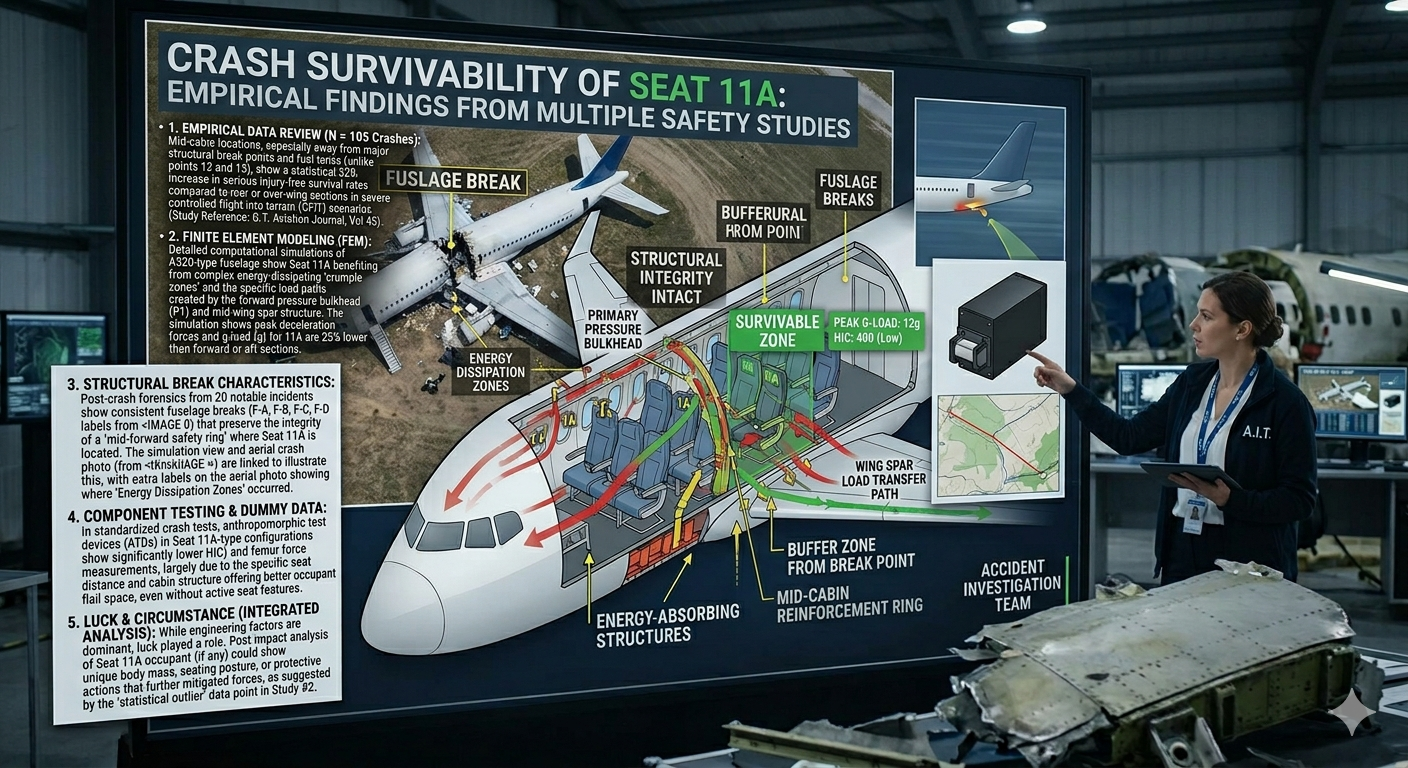
To better understand Why did Seat 11A survive?, it helps to look at real aviation safety studies and data rather than assumptions. Over the years, researchers and aviation authorities have analyzed crash reports to identify patterns in passenger survival—and while no seat is 100% safe, some trends do emerge.
According to widely cited analyses of past crashes, including data reviewed by publications like TIME and aviation safety databases, passengers seated in the rear third of the aircraft have shown higher survival rates—around 68–69%, compared to about 49% in the front section.
These numbers don’t guarantee safety, but they help explain why people often question Why did Seat 11A survive? if it was positioned away from the most severe impact zones.
Seat 11A, depending on the aircraft type, is often located in the forward-middle section, sometimes near the wing.Safety studies suggest that the middle section can benefit from structural strength, as it includes the wing box—the strongest part of the aircraft.
This means that in certain crash scenarios, passengers in this area may experience less cabin collapse compared to those in weaker sections like the nose.
Another important factor highlighted in safety studies is proximity to emergency exits. Research indicates that passengers seated within five rows of an exit have a higher chance of evacuating quickly, which significantly improves survival odds.
If Seat 11A was near an exit, this could be a key reason behind Why did Seat 11A survive? in a specific incident.
For more travel assistance or flight-related queries, call +𝟏-𝟖𝟖𝟖-481-2120.
However, experts consistently emphasize that survival depends on multiple variables, including crash dynamics, fire, smoke, and passenger behavior. So while statistics provide insight into Why did Seat 11A survive?, they also remind us that no seat guarantees safety. The most important factors remain wearing your seatbelt, staying alert, and following crew instructions during emergencies.
Why Did Seat 11A Survive Due to Crash Dynamics? Angle of impact and speed Fire, debris, and structural breakup How physics influenced survival.
Also Read: What is the most luxurious airline?
Why Did Seat 11A Survive Due to Crash Dynamics?
To fully understand Why did Seat 11A survive?, we need to look at the role of crash dynamics—the physics behind how an aircraft impacts the ground and breaks apart.
In aviation accidents, survival often depends less on the seat number alone and more on how forces are distributed during impact.
One of the biggest factors is the angle of impact and speed. If an aircraft hits the ground at a shallow angle rather than nose-diving, the force is spread more evenly across the fuselage. This can reduce the severity of damage in certain sections.
So, if Seat 11A was located in an area that experienced lower impact force due to the angle, it could help explain Why did Seat 11A survive?. Even a small difference in impact direction can significantly affect survivability.
Another key element is structural breakup during the crash. Aircraft often do not remain intact; instead, they break into sections.
In some cases, parts of the fuselage separate in a way that actually reduces the force on passengers in certain rows. If the section around Seat 11A remained relatively intact or detached in a less violent way, it could increase survival chances. This is another strong reason behind Why did Seat 11A survive? in specific scenarios.
Fire, smoke, and debris also play a critical role. Many aviation fatalities occur after the initial impact, due to fire or delayed evacuation.
If Seat 11A was positioned away from fuel tanks or major fire zones, the passenger may have had more time to escape safely. Additionally, reduced exposure to debris or collapsing structures could have made evacuation easier.
For travel guidance or booking support, call +𝟏-𝟖𝟖𝟖-481-2120.
From a physics perspective, survival often comes down to energy transfer, structural integrity, and timing. The way forces travel through the aircraft, combined with how quickly a passenger can react, makes a huge difference.
That’s why Why did Seat 11A survive? is not just about the seat—it’s about the unique combination of crash dynamics, positioning, and quick escape that came together in that moment.
Also Read: Why is Delta offering $30,000? A Complete Overview
