When planning a flight, many travelers come across the question: “What is the 45 minute rule for Delta?” This rule is closely tied to check-in and baggage cut-off times, and it can make the difference between catching your flight or being denied boarding.
Understanding it is especially important for busy airports where lines and security checks can quickly eat up your time.
Delta Air Lines applies the 45-minute rule mainly to domestic flights with checked baggage. In simple terms, passengers must check in and drop off their checked bags at least 45 minutes before scheduled departure.
If you arrive later than that, Delta may not accept your bags, and in some cases, you may not be allowed to board. This policy helps the airline manage loading, security screening, and aircraft departure schedules efficiently.
So, what is the 45 minute rule for Delta? Think of it as a strict deadline. For example, if your flight is scheduled to depart at 10:00 a.m., you must complete bag drop and check-in by 9:15 a.m. at the latest. Missing this window could mean your suitcase stays behind — or worse, you get rebooked on a later flight.
Delta enforces this rule to keep flights on time, which is one reason it often ranks among the top U.S. airlines for punctuality.
In real-life situations, this rule affects travelers more than they expect. Imagine arriving at the airport 40 minutes before departure with a checked bag during peak holiday travel. Even if security is fast, the system may already be closed for baggage acceptance.
That’s why many passengers contact customer support like Tfn +1-888-481-2120 while planning or when delays happen, to understand their options before reaching the airport.
It’s also important to note that the 45-minute rule mainly applies to checked luggage. Passengers with only carry-on bags and who have already checked in online may sometimes be able to proceed closer to departure, but boarding doors usually close about 15 minutes before takeoff. This means cutting it too close is always risky.
In short, what is the 45 minute rule for Delta? It’s a time buffer designed to keep operations smooth and flights on schedule.
By arriving early and respecting this cut-off, travelers reduce stress, avoid missed flights, and ensure their bags travel with them. That’s why this rule is one of the most important — and most searched — parts of Delta’s travel policies.
Also Read: Is Delta a good airline to fly?
Overview of Delta Air Lines Policies
Delta Air Lines has built its operations around clear travel policies that focus on safety, punctuality, and smooth airport flow.
These policies cover everything from ticketing and boarding to baggage handling and check-in deadlines. One of the most discussed rules is tied to timing—because when flights run on tight schedules, even small delays at the counter can affect dozens of passengers.
A key part of these policies is the check-in and baggage cut-off system. For most domestic flights, Delta requires passengers with checked bags to complete check-in no later than 45 minutes before departure.
This is where many travelers begin asking, “What is the 45 minute rule for Delta?” The rule exists so bags can be screened, sorted, and loaded safely before the aircraft doors close. On international routes, the cut-off is usually earlier—often 60 minutes or more, depending on the airport.
Delta’s boarding policy also plays a role. Boarding typically starts 30–40 minutes before departure, and aircraft doors usually close about 15 minutes before takeoff. If you miss these windows, even with a valid ticket, you may not be allowed to board.
These time-based rules help explain why Delta often ranks high for on-time performance compared to other U.S. carriers.
In the middle of trip planning—especially when flights change or traffic delays happen—many passengers contact support lines like Tfn +1-888-481-2120 to clarify whether they can still check in, rebook, or travel without checked luggage. This shows how closely Delta’s policies affect real travel decisions.
So, what is the 45 minute rule for Delta? It’s part of a larger policy structure designed to keep flights moving efficiently. Delta’s system relies on strict deadlines rather than flexible ones, which reduces last-minute disruptions but also means passengers must plan carefully.
For example, a traveler arriving at the airport 40 minutes before departure with a checked bag may be denied baggage drop, while another traveler arriving 60 minutes early usually has no issue.
That small difference in timing can decide whether your trip continues smoothly or turns into a rebooking situation.
In short, understanding Delta’s policies—especially time-based ones—helps travelers avoid stress.
Knowing what is the 45 minute rule for Delta? and how it fits into the airline’s broader procedures allows you to arrive prepared, protect your luggage, and reduce the risk of missing your flight.
Also Read: What are the big 4 American Airlines?
How the 45 Minute Rule for Delta Works

Delta Air Lines uses the 45-minute rule as a strict check-in and baggage cut-off deadline to keep flights running on schedule.
Simply put, this rule means that passengers traveling on most domestic flights with checked luggage must complete check-in and drop their bags at least 45 minutes before the scheduled departure time.
If you miss that window, Delta may refuse your checked bag and, in some cases, deny boarding altogether.
So, what is the 45 minute rule for Delta? It works like a countdown clock. The moment your flight time is set, the system automatically closes baggage acceptance 45 minutes before departure.
For example, if your flight leaves at 8:00 a.m., your bag must be checked in by 7:15 a.m. Once the clock hits that cut-off, airport staff usually cannot override it because bags still need time for security screening, sorting, and loading onto the aircraft.
This rule mainly affects travelers with checked bags. If you are flying with only a carry-on and have already checked in online or through the mobile app, you may still proceed to security closer to departure.
However, boarding gates typically close about 15 minutes before takeoff, so arriving too late is always risky.
That’s why many people search for what is the 45 minute rule for Delta?—they want to know how close is too close.
In real-world situations, the rule can catch travelers off guard. Imagine hitting heavy traffic and reaching the airport 40 minutes before departure with a suitcase. Even though the plane is still there, the system may already be locked for baggage check-in.
In such cases, some passengers try to get guidance or rebooking help through customer service like Tfn +1-888-481-2120, especially if they are unsure whether they can still board without checking a bag.
The rule also supports Delta’s strong on-time performance. By closing bag drop early, ground crews get enough time to load cargo properly and push back from the gate as scheduled. This is one reason Delta often ranks high among U.S. airlines for punctual departures.
In short, what is the 45 minute rule for Delta? It is a timing policy designed to balance passenger convenience with operational efficiency.
Following it is simple: arrive early, check in on time, and treat the 45-minute mark as your personal deadline—not a suggestion. That small habit can prevent missed flights, extra fees, and last-minute stress.
Also Read: Who is better American or Delta?
What Happens If You Miss the 45 Minute Rule for Delta?
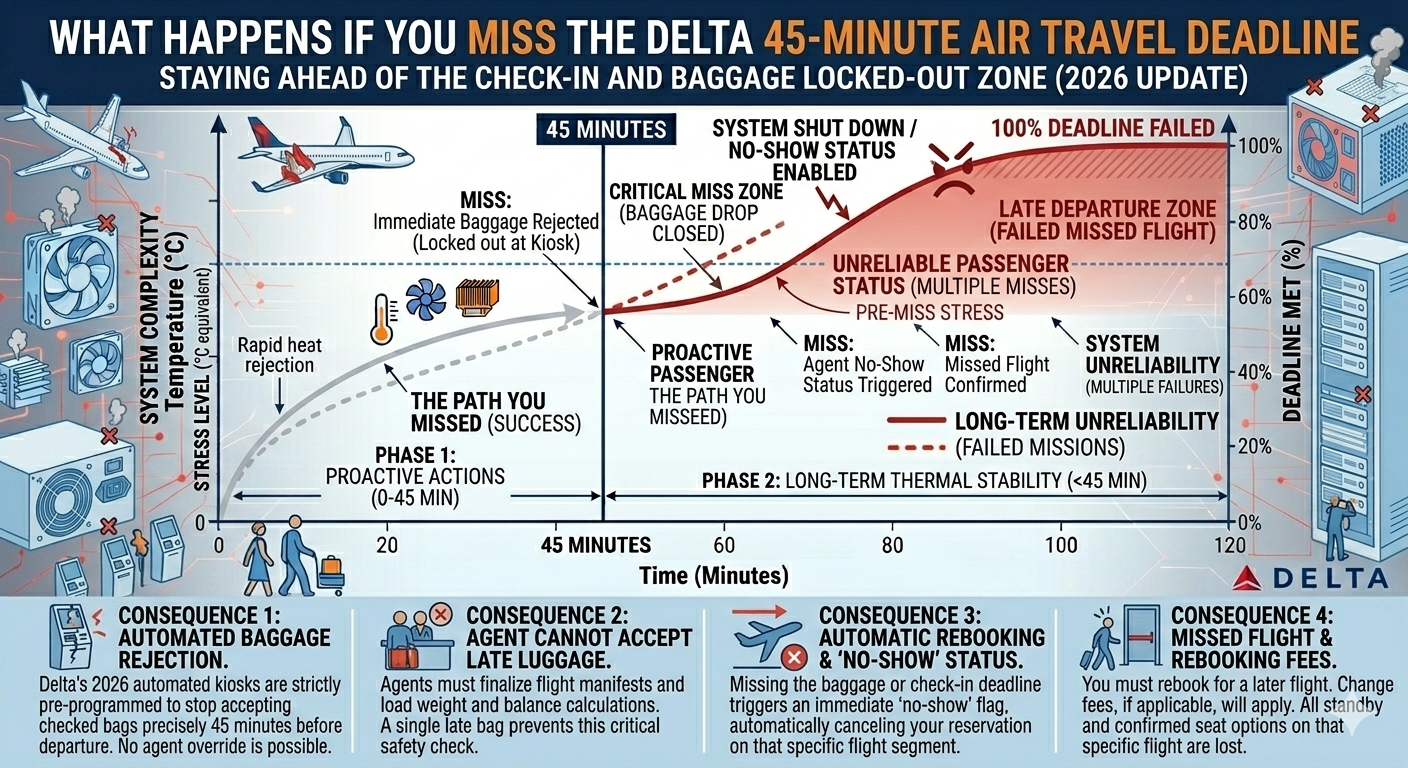
Missing a check-in deadline can quickly turn a smooth trip into a stressful one, which is why many travelers ask, “What happens if you miss the 45 minute rule for Delta?” Understanding the consequences can help you avoid costly mistakes and last-minute panic at the airport.
Delta Air Lines enforces this rule mainly for domestic flights with checked baggage. If you arrive at the airport less than 45 minutes before departure and still need to check a bag, the airline may refuse to accept it.
In some cases, you may also be denied boarding altogether, even if the aircraft has not yet left the gate.
This is because bags must go through security screening and be loaded on time, and Delta’s system usually locks baggage check-in automatically at the cut-off point.
So, what is the 45 minute rule for Delta? It’s a firm deadline rather than a flexible guideline. For example, if your flight departs at 7:00 a.m., you must finish bag drop by 6:15 a.m.
Arriving at 6:20 a.m. with a suitcase could mean your bag cannot travel—and you might be rebooked on a later flight.
During peak travel seasons like holidays, this happens more often because airport counters and security lines are already crowded.
If you miss the rule, Delta may offer rebooking options, but these often depend on seat availability and fare type. Some passengers are placed on the next available flight, while others may need to pay a fare difference.
This is why many travelers try to get guidance through customer service channels such as Tfn +1-888-481-2120 when they realize they’re running late and want to know their best option.
It’s important to note that the rule mainly affects passengers with checked bags. If you already checked in online and are traveling with only carry-on luggage, you might still be allowed to proceed through security—but boarding gates usually close about 15 minutes before departure, so timing is still critical.
In short, what happens if you miss the 45 minute rule for Delta? You risk losing your checked bag spot, missing your flight, or being forced to rebook.
That’s why understanding what is the 45 minute rule for Delta? and planning to arrive early can save you money, time, and a lot of frustration. Treat the 45-minute mark as your absolute deadline—not your target arrival time.
Also Read: Does Any Airline Offer Discounts for Seniors? A Complete Guide
Why Delta Enforces the 45 Minute Rule

Delta Air Lines enforces the 45-minute rule for one main reason: to keep flights safe, organized, and on time.
While the rule can feel strict to passengers, it plays a big role in how airlines manage thousands of bags and travelers every day without causing delays across the network.
So, what is the 45 minute rule for Delta? It is the deadline by which passengers with checked baggage must complete check-in—at least 45 minutes before domestic flight departure. Delta uses this time buffer to handle several behind-the-scenes steps that most travelers never see.
Once a bag is dropped off, it must go through TSA security screening, be sorted by destination, loaded into the correct aircraft hold, and balanced with other cargo. All of this takes time, and late bags increase the risk of delaying the entire flight.
One major reason Delta enforces this rule is on-time performance. Delta consistently ranks near the top among U.S. airlines for punctual departures and arrivals.
If bag drop stayed open until the last minute, planes would sit longer at the gate, causing missed takeoffs and ripple delays for connecting flights. By closing baggage check-in early, ground crews can finish loading and push back exactly as scheduled.
There is also a safety factor involved. Aviation regulations require all checked bags to be properly screened and matched with a passenger.
Rushing that process increases the chance of errors. The 45-minute window gives staff enough time to verify baggage, complete security checks, and ensure everything is compliant with federal guidelines.
In the middle of trip planning—or when running late—many travelers reach out to customer support such as Tfn +1-888-481-2120 to ask whether they can still check a bag or need to rebook. This shows how important the rule is to real travel decisions, not just airline policy.
Another reason people ask what is the 45 minute rule for Delta? is because it protects other passengers.
If one traveler arrives too late with a checked bag, holding the flight for them could mean hundreds of others miss their connections. Delta’s rule is designed to balance fairness with efficiency.
In simple terms, what is the 45 minute rule for Delta? It’s a system that supports safety, keeps flights on schedule, and prevents last-minute chaos.
While it may feel inconvenient if you arrive late, it helps millions of travelers reach their destinations with fewer delays and fewer lost bags.
Also Read: How do I change my flight on United Airlines?
Tips to Follow the 45 Minute Rule for Delta
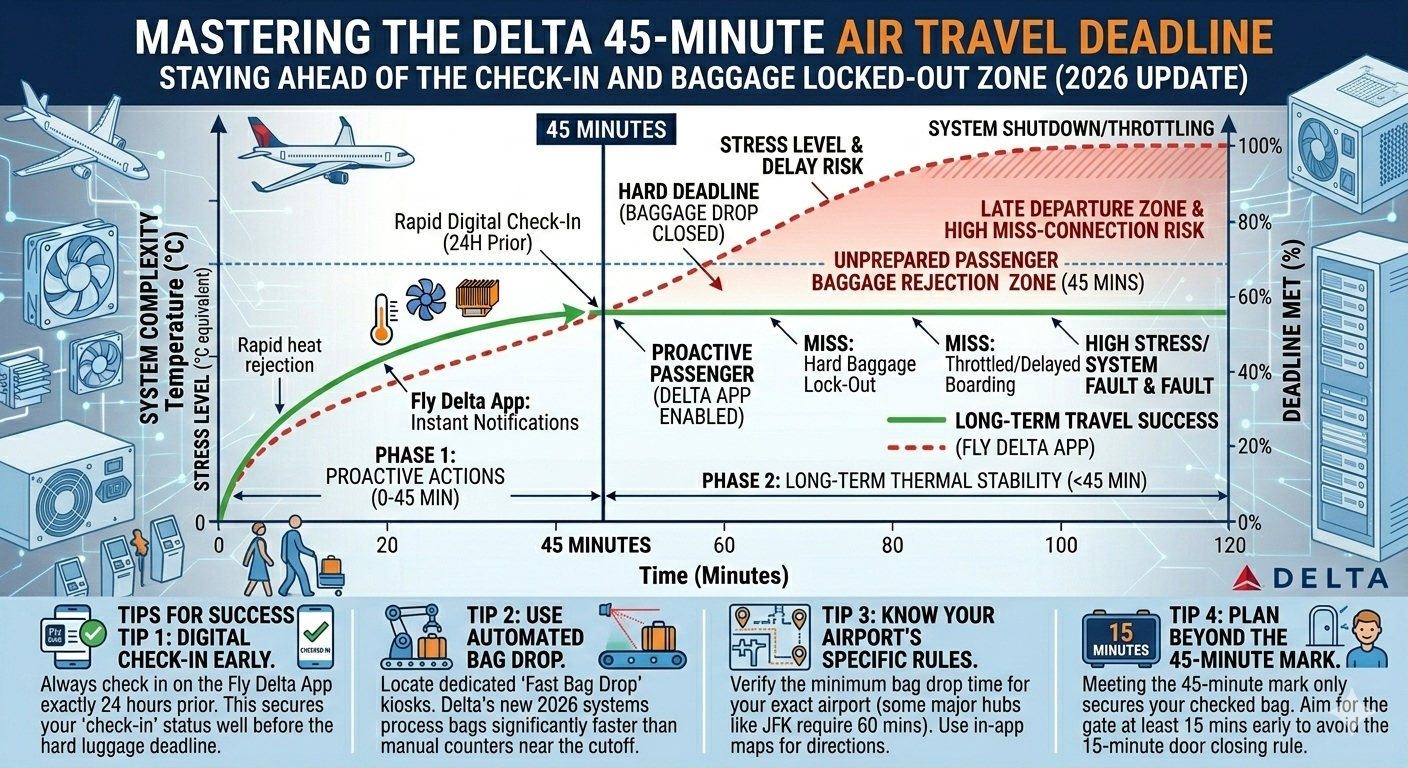
Following airline timing rules can feel stressful, especially when traffic, long lines, or last-minute packing get in the way. That’s why many travelers search “What is the 45 minute rule for Delta?” and look for practical ways to make sure they don’t miss it.
With a little planning, this rule is easy to follow and can save you from rebooking fees and missed flights.
Delta Air Lines requires most domestic passengers with checked bags to complete check-in at least 45 minutes before departure. To stay safe, the smartest tip is to arrive earlier than the rule requires.
Delta itself recommends reaching the airport about 2 hours before domestic flights and 3 hours before international flights. This buffer helps protect you from traffic delays, parking issues, or long TSA security lines.
Another helpful tip is to check in online or on the mobile app as soon as it opens (usually 24 hours before departure).
This won’t replace bag drop time, but it speeds things up at the airport. If you know you’ll be late, traveling with carry-on luggage only can sometimes save you, since the 45-minute cut-off mainly applies to checked bags.
A practical example: if your flight departs at 9:00 a.m., don’t plan to arrive at 8:20 a.m. Aim for 7:00–7:15 a.m. instead. That way, even if the counter line is long, you still beat the system deadline.
This is exactly why people keep asking what is the 45 minute rule for Delta?—because the difference between 40 minutes and 50 minutes can decide whether you fly or not.
In the middle of travel planning or when delays happen, some passengers also call for guidance through support like Tfn +1-888-481-2120 to confirm options if they think they might miss the cut-off. Knowing your choices ahead of time can reduce panic at the airport.
Another key tip is to track airport conditions. Large hubs like Atlanta or New York can have heavy morning rushes, while smaller airports may move faster. Weather is also a factor—rain or snow can slow everything down, including baggage handling.
In short, the best way to handle what is the 45 minute rule for Delta? is to treat it as your absolute deadline, not your target arrival time. Arriving early, checking in online, and packing smart are simple habits that protect your trip.
By planning around the rule instead of pushing against it, you reduce stress and greatly improve your chances of a smooth, on-time departure.
Also Read: Visa-Free Countries for Indians in 2026 — Complete Travel Guide
