Every year on 26 January, India wakes up to a familiar visual rhythm. Tricolour flags flutter across streets and balconies, television screens fill with marching contingents, fighter jet flypasts, and colourful state tableaux rolling down Rajpath.
For many, Republic Day of India is remembered as a national holiday marked by school functions, patriotic songs, and a sense of formal celebration. It is visual, grand, and deeply symbolic—but it is also often understood only at the surface level.
What often gets missed is that the Republic Day of India is not just about a parade or a public display of national pride. It marks one of the most defining moments in the country’s democratic journey.
On this day, India didn’t merely celebrate independence—it affirmed its identity as a sovereign republic governed by a Constitution written by its own people.
Unlike Independence Day, which commemorates freedom from colonial rule, Republic Day of India represents the moment India chose how it would govern itself. It signifies the transition from a nation that had gained freedom to one that consciously adopted democratic values, rule of law, equality, and justice as the foundation of its future.
The celebrations, therefore, are not just ceremonial—they are reminders of a collective promise made to every citizen.
26 January stands as a constitutional milestone. It is the day the Indian Constitution came into effect, replacing colonial-era laws with a framework designed to protect rights, define responsibilities, and ensure representation. Every salute, anthem, and procession traces back to this moment when the country formally entrusted power to its people and institutions.
This article looks beyond the spectacle to explore the deeper meaning behind the day. It will uncover the historical reasons behind choosing 26 January, explain the constitutional importance of Republic Day, and reflect on how its relevance continues to evolve in modern India.
From its origins to its role in shaping civic responsibility today, Republic Day is not just a date on the calendar—it is a living reminder of India’s democratic soul.
By understanding what lies beneath the flags, jets, and tableaux, we gain a clearer appreciation of why this day truly matters.
What Is Republic Day of India?
Republic Day of India is the national celebration that marks the day when the Indian Constitution came into force, transforming the country into a sovereign, democratic republic. Observed every year on 26 January, this day represents the moment India formally adopted its own system of governance, replacing colonial laws with a constitution written by and for its people.
To fully understand the significance of Republic Day, it helps to distinguish it from Independence Day. Independence Day, celebrated on 15 August, commemorates India’s freedom from British rule in 1947. It marks the end of colonial control. Republic Day, however, goes a step further.
While independence gave India political freedom, Republic Day established how that freedom would be exercised. It is the day India chose democracy, rule of law, and equality as the guiding principles of the nation.
The term “republic” carries special meaning in the Indian context. In a republic, the head of the state is not a monarch and does not inherit power by birth. Instead, authority flows from the people.
When India became a republic on 26 January 1950, sovereignty officially shifted from the British Crown to Indian citizens. Power was no longer vested in a ruler, but in a constitutional framework that placed the people at the centre of governance.
This transition was historic. It meant that every citizen, regardless of background, became equal under the law. Rights were guaranteed, duties were defined, and democratic institutions were established to represent the will of the people.
Elections, an independent judiciary, and accountable leadership became the pillars of the new republic.
In essence, Republic Day of India is not merely a commemoration of the Constitution’s adoption—it is a reminder of India’s commitment to self-rule, justice, and democratic values.
It celebrates the moment when the nation declared that its future would be shaped not by rulers, but by its citizens.
Why 26 January Was Chosen as Republic Day of India
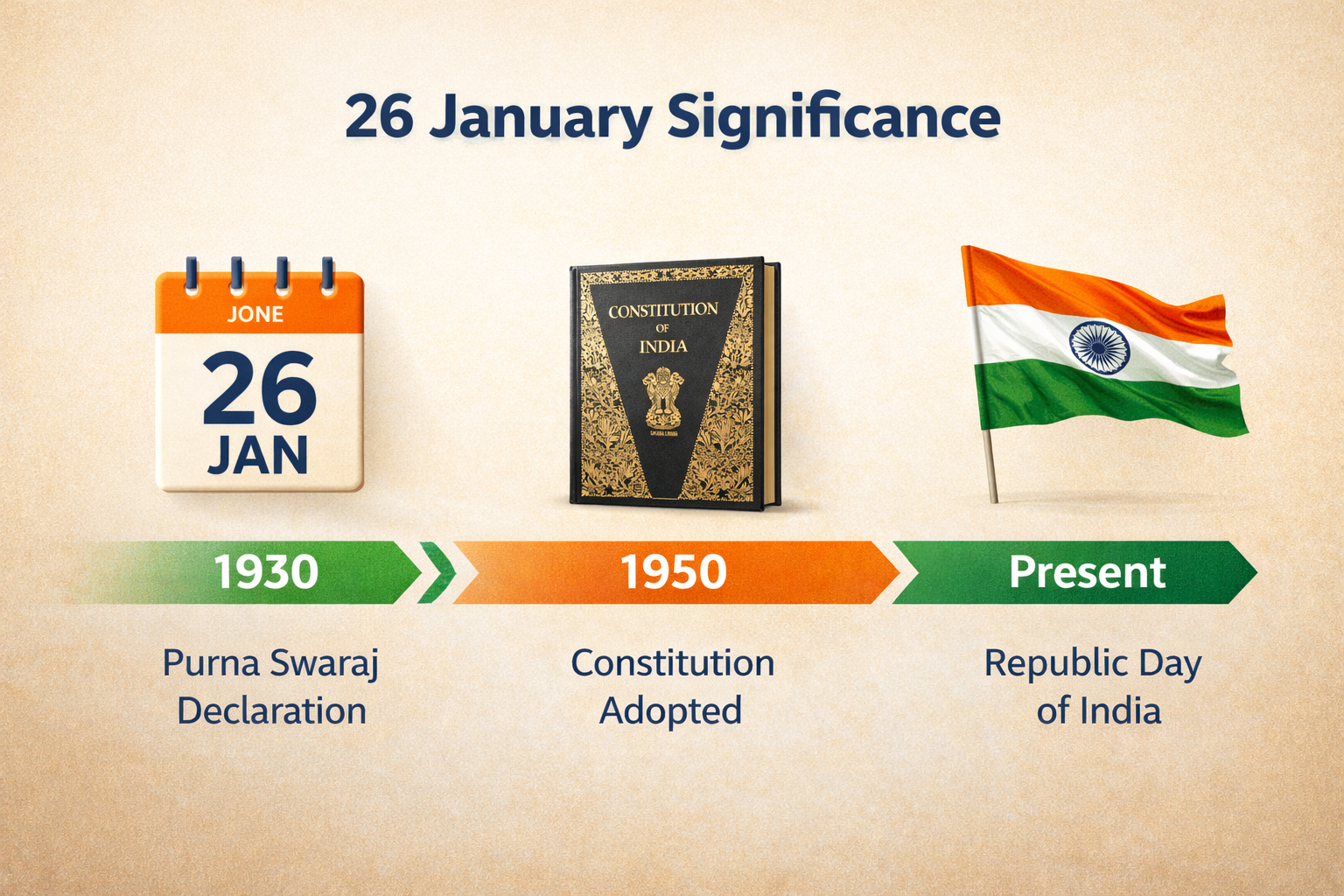
The choice of 26 January as Republic Day was not accidental or administrative convenience. It was a deliberate decision rooted in India’s freedom struggle, political vision, and constitutional history.
To understand its importance, we must look at the events that unfolded long before India officially became independent.
The Historical Context Before Independence
Before 1947, India was governed under British colonial rule, with limited self-governance allowed through laws framed by the British Parliament.
Acts such as the Government of India Act, 1935, provided some administrative autonomy, but real power remained firmly in colonial hands. Indians had little control over national policy, defense, or foreign affairs.
As nationalist movements grew stronger, so did the demand for complete self-governance. Indian leaders increasingly rejected partial reforms and constitutional concessions offered by the British.
The freedom movement evolved from seeking dominion status within the British Empire to demanding full independence. This shift marked a critical moment in India’s political consciousness—freedom was no longer negotiable; it was a right.
Purna Swaraj Declaration of 1930
A defining moment came during the Lahore Session of the Indian National Congress in December 1929. Under the leadership of Jawaharlal Nehru, the Congress adopted the historic Purna Swaraj (Complete Independence) resolution. This declaration rejected British authority entirely and called for India to govern itself without external control.
To give the resolution lasting significance, the Congress decided that 26 January 1930 would be observed as Independence Day across the country. On that day, Indians pledged loyalty to self-rule, hoisted the national flag, and participated in peaceful protests.
Although independence was not achieved then, 26 January became a powerful symbol of India’s uncompromising demand for sovereignty.
For the next two decades, the date carried deep emotional and political value. It represented resistance, unity, and the aspiration for a free, self-governing nation. This symbolic weight would later play a crucial role in shaping India’s constitutional timeline.
Adoption of the Indian Constitution in 1950
India finally achieved independence on 15 August 1947, but freedom alone did not define the nation’s future. A newly independent country needed a robust constitutional framework to guide governance, protect rights, and unify a diverse population.
This responsibility was entrusted to the Constituent Assembly, which began drafting the Constitution in December 1946.
The drafting process took nearly three years, involving extensive debates, committees, and consultations. By November 1949, the Constitution was completed and formally adopted. The next question was when it should come into effect.
The leadership made a conscious and symbolic choice: 26 January 1950. By selecting this date, India honored the Purna Swaraj declaration of 1930 and connected the constitutional republic directly to the freedom movement’s original promise of complete independence.
Thus, the date bridged India’s struggle for freedom with its constitutional identity. On 26 January 1950, India did not just implement a legal document—it fulfilled a long-standing pledge to govern itself as a sovereign republic, rooted in democratic values and the will of its people.
This deliberate choice transformed 26 January into more than a historical marker; it became a living symbol of India’s journey from colonial rule to constitutional democracy.
The Indian Constitution: Foundation of Republic Day of India
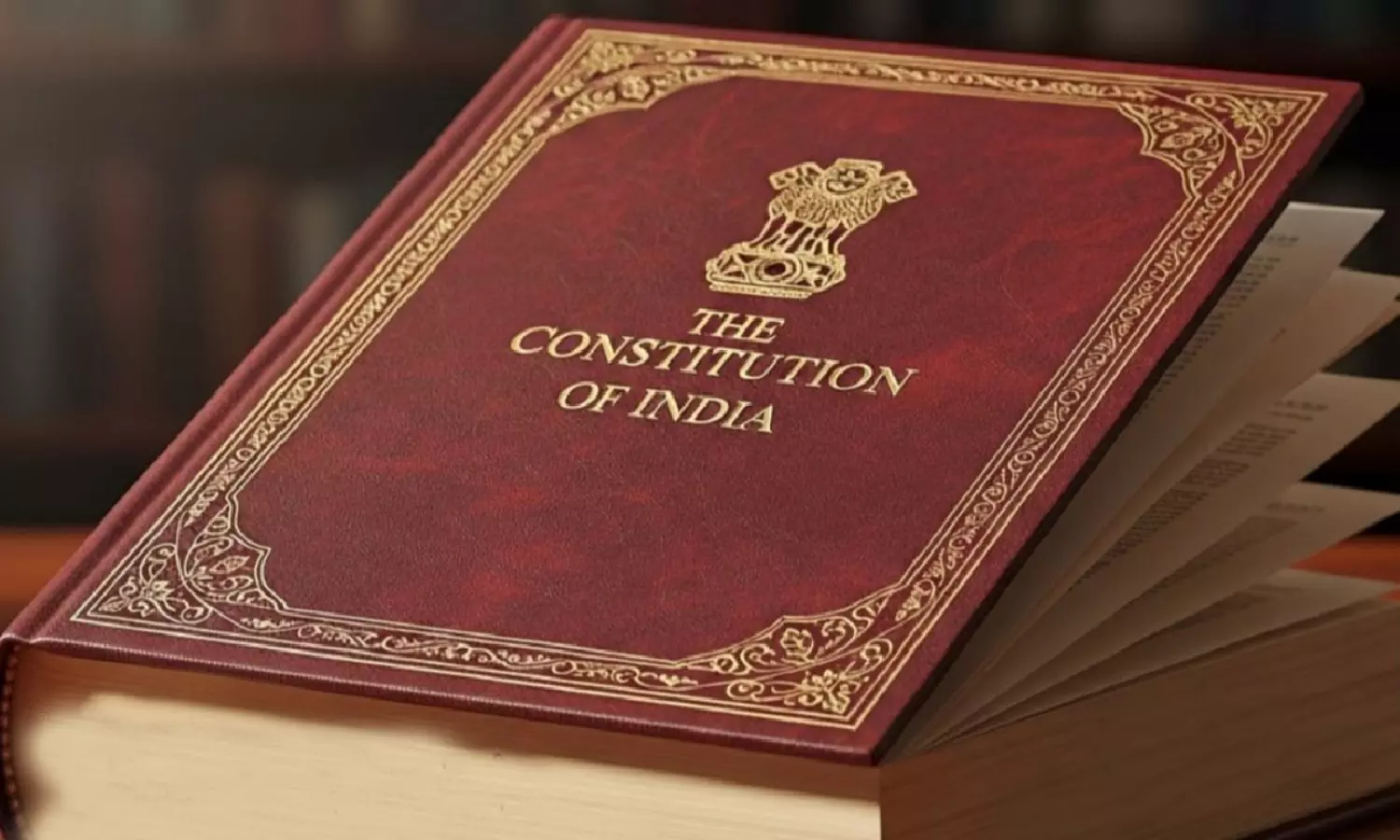
Republic Day derives its true meaning from the Indian Constitution. While parades and ceremonies mark the occasion publicly, it is the Constitution that gives the day its legal, moral, and democratic foundation.
Adopted after years of careful deliberation, the Constitution defines how India functions as a republic and why 26 January holds such enduring significance.
Drafting of the Constitution
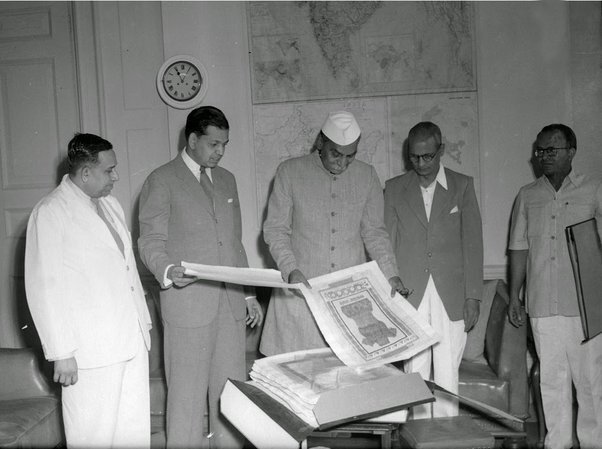
The drafting of the Indian Constitution was one of the most extensive and inclusive constitution-making exercises in history. The Constituent Assembly began its work in December 1946, even before India became independent, and continued for nearly three years.
In total, the drafting process took 2 years, 11 months, and 18 days, reflecting the seriousness with which the task was undertaken.
What made this process remarkable was the diversity of voices involved. The Constituent Assembly consisted of representatives from different regions, religions, castes, professions, and political backgrounds.
Lawyers, social reformers, economists, educators, and freedom fighters all contributed to shaping the document. This diversity ensured that the Constitution addressed the realities of a complex and plural society rather than serving the interests of a narrow elite.
At the center of this effort was Dr. B. R. Ambedkar, Chairman of the Drafting Committee. His leadership was instrumental in translating democratic ideals into clear legal provisions.
Ambedkar’s deep understanding of law, social justice, and equality helped ensure that the Constitution protected marginalized communities while balancing individual rights with national unity. His role cemented the Constitution not just as a legal document, but as a tool for social transformation.
Key Principles Enshrined
The Indian Constitution is built on a set of core principles that define the republic’s moral and political character. These principles are clearly reflected in the Preamble, which serves as the philosophical introduction to the document.
Justice—social, economic, and political—is a central goal. The Constitution seeks to correct historical inequalities and ensure fairness in opportunity and treatment.
Liberty guarantees freedom of thought, expression, belief, faith, and worship, allowing citizens to live with dignity and personal autonomy.
Equality ensures that all individuals are equal before the law, rejecting discrimination based on caste, religion, gender, or place of birth.
Fraternities emphasize unity and brotherhood, promoting a sense of belonging among members despite diversity.
Alongside these values, the Constitution firmly establishes secularism and democracy. India does not favor any religion, and governance is based on the will of the people expressed through free and fair elections.
Together, these principles form the ethical backbone of the republic and explain why Republic Day of India is fundamentally about values, not spectacle.
How the Constitution Defines India as a Republic
The Constitution clearly defines India as a republic by placing power in the hands of its citizens. One of the most visible expressions of this is the role of the President of India as the Head of State.
Unlike a monarchy, the President is not a hereditary ruler but is elected indirectly, symbolizing the sovereignty of the people.
More importantly, all authority in India flows from the Constitution. Governments operate within their limits, leaders are accountable under their provisions, and citizens are protected by their guarantees.
The rule of law ensures that no individual or institution is above the Constitution, reinforcing equality and accountability.
In essence, the Indian Constitution transforms independence into self-rule. It is this transformation that Republic Day celebrates—making the Constitution not just a legal framework, but the living foundation of India’s identity as a republic.
Republic Day of India vs Independence Day: Key Differences
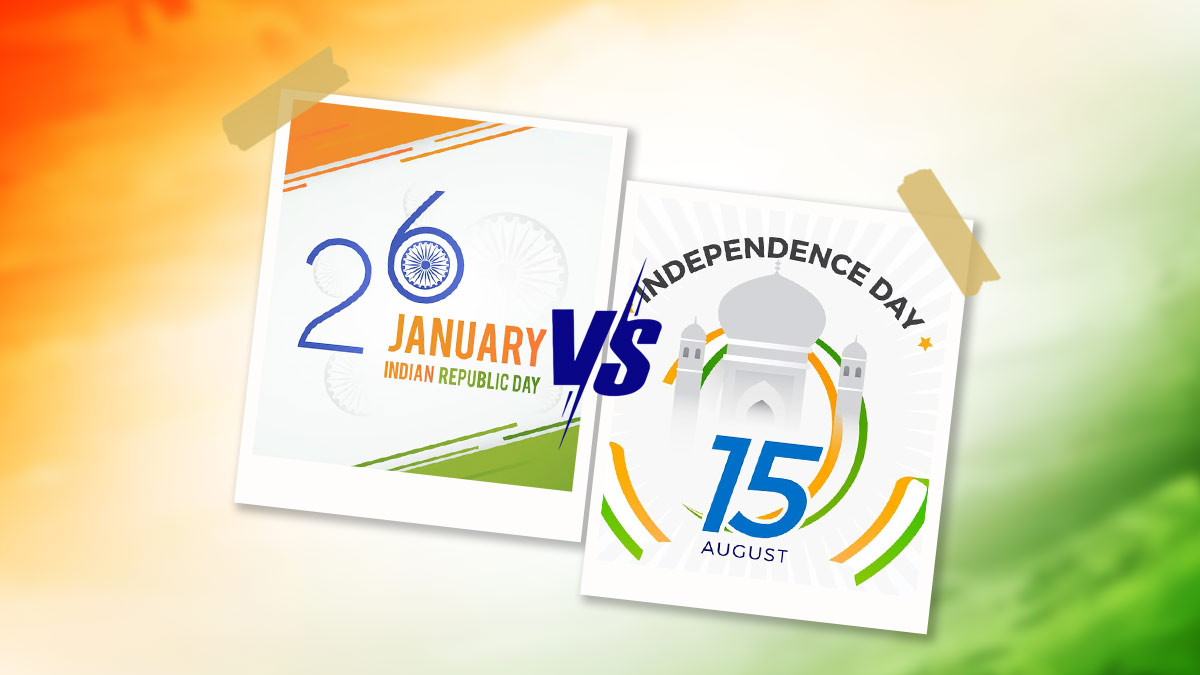
India observes two major national days that often appear similar on the surface but represent very different milestones in the country’s journey. While both Republic Day and Independence Day celebrate freedom and nationhood, they mark distinct phases—one emotional and symbolic, the other constitutional and structural. Understanding the difference between the two offers deeper insight into how modern India was formed.
Freedom vs Governance
Independence Day, celebrated on 15 August, marks India’s freedom from British colonial rule in 1947. It represents the end of foreign domination and the reclaiming of political freedom. Republic Day, observed on 26 January, signifies something equally important but different—the beginning of self-governance under a constitution created by Indians themselves. One celebrates freedom from external control; the other establishes how that freedom would be exercised.
Colonial Exit vs Constitutional Beginning
Independence Day marks the exit of colonial power. The British authority formally ended, and India emerged as a free nation. However, many colonial-era laws still existed at that time.
Republic Day marks the constitutional beginning of India, when the Indian Constitution came into effect in 1950. This transition replaced colonial legal frameworks with a system rooted in democratic values, rights, and responsibilities.
Symbolic vs Structural Independence
Independence Day carries strong emotional and symbolic significance. It represents sacrifice, struggle, and national unity.
Republic Day, on the other hand, represents structural independence—the establishment of institutions, the rule of law, and democratic governance. Together, they reflect two sides of sovereignty: winning freedom and building a nation.
How Both Days Complement Each Other
Independence Day answers the question, “Are we free?”
Republic Day answers the question, “How will we govern ourselves?”
One without the other would be incomplete. Freedom without a constitution lacks direction, while a constitution without freedom has no authority. Together, these days tell the complete story of India’s transformation from a colonized nation to a democratic republic.
Republic Day of India vs Independence Day of India : Comparison Table
| Aspect | Independence Day | Republic Day |
| Date | 15 August 1947 | 26 January 1950 |
| Significance | End of British rule | The Constitution comes into force |
| Focus | Political freedom | Democratic governance |
| Nature | Symbolic independence | Structural independence |
| Head of State | British Monarch (initially) | President of India |
| What it Represents | Freedom from colonization | Power vested in the people |
Together, Republic Day and Independence Day form the twin pillars of India’s national identity—freedom earned and democracy defined.
Republic Day of India Parade: Symbolism, Not Spectacle
At first glance, the Republic Day Parade may seem like a grand national spectacle—rows of marching soldiers, vibrant tableaux, synchronized performances, and aerial flypasts broadcast across the country.
But to view the parade merely as a display of pageantry is to miss its deeper purpose. Every element of the Republic Day Parade is carefully designed to communicate the values, structure, and spirit of the Indian Republic.
Why the Parade Exists
The Republic Day Parade exists to visually express the idea of India as a united, sovereign republic. It serves as a reminder that national strength is not just military might, but collective harmony.
The parade brings together the armed forces, cultural traditions, government institutions, and citizens on a single platform, reinforcing the idea that the republic belongs to everyone.
One of its core purposes is to showcase unity in diversity. India’s vast cultural, linguistic, and regional differences are not hidden—they are celebrated.
By presenting this diversity in an organized, respectful manner, the parade sends a powerful message: pluralism is not a weakness, but the foundation of the nation’s strength.
Meaning Behind the Key Elements
Tableaux
The state and central government tableaux are not decorative floats. Each one tells a story—about regional heritage, social progress, environmental awareness, or national priorities.
Together, they reflect India’s federal structure, where states retain their unique identities while contributing to a shared national vision.
Armed Forces March
The marching contingents of the Army, Navy, and Air Force symbolize discipline, readiness, and constitutional loyalty.
Their presence is not a display of aggression but a reminder that the armed forces serve the Constitution and protect the democratic framework of the republic.
President’s Role
The President of India presides over the parade as the constitutional Head of State. This is significant.
The President represents the authority of the Constitution, not personal power. Their presence reinforces the idea that all institutions—including the military—operate under civilian, constitutional control.
National Anthem
The National Anthem concludes the ceremony by uniting everyone present in a shared moment of respect. It is a reminder that despite differences in region, language, or belief, allegiance to the nation and its Constitution is collective.
What the Parade Represents About the Republic
Beyond its visuals, the Republic Day Parade represents the federal nature of India, where states and the center coexist within a constitutional framework. It reflects unity without uniformity, showing that diversity is acknowledged, not erased.
Most importantly, the parade expresses democratic pride. It is not a celebration of rulers, but of institutions, values, and citizens.
By placing culture, defense, and constitutional authority side by side, the parade reminds us that the republic is sustained not by spectacle, but by shared commitment to democracy.
Seen this way, the Republic Day Parade becomes what it was always meant to be—not a performance to watch, but a message to understand.
Republic Day and the Role of Citizens
Republic Day is often viewed as a national celebration, but its true relevance lies in what it expects from citizens beyond ceremonial participation. While the Constitution defines the structure of the republic, it is the people who give it life.
Republic Day of India serves as a reminder that democracy is not sustained by institutions alone—it depends on informed, responsible, and engaged citizens.
Rights Granted by the Constitution
One of the most powerful aspects of the Indian Constitution is the set of Fundamental Rights it guarantees to every citizen. These rights ensure that individuals can live with dignity, freedom, and equality, regardless of social or economic background.
Fundamental Rights include the Right to Equality, which ensures equal treatment before the law; the Right to Freedom, which protects speech, expression, movement, and personal liberty; and the Right against Exploitation, which safeguards human dignity.
The Constitution also guarantees Freedom of Religion, allowing citizens to practice and profess their beliefs freely, and the Right to Constitutional Remedies, which empowers individuals to approach courts if their rights are violated.
Republic Day marks the moment these rights became legally enforceable. It reminds citizens that freedoms are not abstract ideals—they are constitutional guarantees designed to protect individuals from abuse of power and discrimination.
However, rights remain meaningful only when citizens are aware of them and willing to defend them through lawful means.
Duties of Indian Citizens
Alongside rights, the Constitution outlines Fundamental Duties, which emphasize responsibility toward the nation and society. These duties encourage citizens to respect the Constitution, the national flag, and the national anthem, and to uphold the unity and integrity of India.
Fundamental Duties also promote values such as harmony, scientific temper, environmental protection, and respect for public property. Importantly, they remind citizens that freedom comes with responsibility.
Civic responsibility goes beyond attending Republic Day events—it includes everyday actions such as respecting laws, protecting shared resources, and contributing positively to society.
Republic Day reinforces the idea that being a citizen is not a passive identity. It is an active role that requires awareness, participation, and ethical conduct throughout the year.
Republic Day of India as a Reminder, Not a Holiday
In a modern democracy, Republic Day should be seen not merely as a public holiday, but as a call to civic engagement. It encourages citizens to reflect on how they participate in democratic processes.
Voting, for instance, is one of the most direct ways citizens exercise sovereignty. Participating in elections ensures that governance remains accountable to the people.
Beyond voting, law-abiding behavior, informed public discourse, and community involvement are essential to sustaining democracy.
Questioning policies respectfully, staying informed, and contributing to civic life strengthen the republic far more than symbolic gestures alone.
Ultimately, Republic Day of India reminds citizens that democracy is not self-sustaining. It survives through daily choices, responsible action, and collective commitment. Celebrating the republic means actively participating in it—every day, not just on 26 January.
Here’s Section 8 written in full — 300–350 words, warm, relatable, and grounded in everyday experiences while reinforcing national identity.
Republic Day of India in Schools, Communities and Public Life
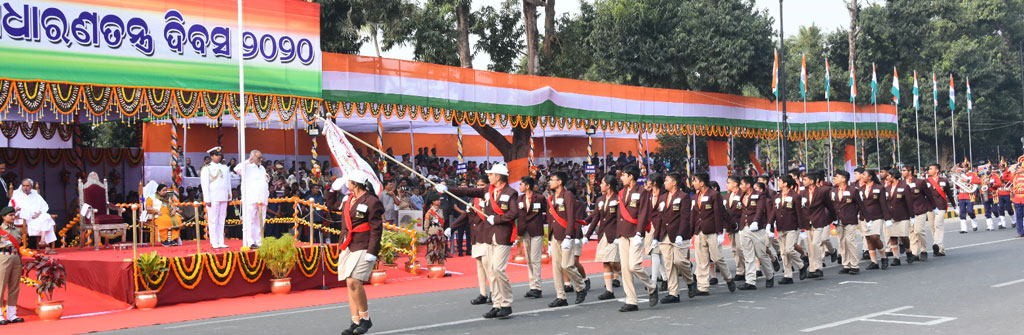
For many Indians, the first memory of Republic Day is not the grand parade in New Delhi, but a school assembly ground. Children dressed in white, tricolour badges pinned to uniforms, patriotic songs rehearsed for weeks—these moments form the emotional foundation of how Republic Day of India is understood at a personal level.
School celebrations are often simple, but their purpose is deeply meaningful: to introduce young citizens to the values of the Constitution and the idea of collective belonging.
In schools, Republic Day programs usually include flag hoisting, the National Anthem, speeches, and cultural performances. These activities are not meant to showcase talent alone.
They serve as early lessons in respect for national symbols, unity, and civic responsibility. By participating in these rituals, students learn that the republic is not an abstract concept—it is something they are a part of.
Beyond schools, Republic Day is observed across communities in different ways. Housing societies, local parks, offices, and government institutions organize flag hoisting ceremonies and small gatherings.
These community-level observances may not be elaborate, but they reflect shared participation. People from different backgrounds come together, even briefly, to acknowledge a common national identity. In doing so, Republic Day becomes inclusive rather than centralized.
Flag hoisting rituals hold special significance. The act of raising the national flag is a reminder of sovereignty and self-rule.
Unlike colonial-era practices, the flag is hoisted by Indian citizens and leaders, symbolizing that authority rests within the nation. The National Anthem that follows creates a moment of collective reflection, transcending individual differences.
These traditions matter because they keep constitutional values visible in everyday life. They reinforce respect for democratic institutions and remind citizens that national identity is not built only through historic events, but through repeated, shared practices.
Republic Day celebrations in schools and communities help pass democratic values from one generation to the next, ensuring that the spirit of the republic remains alive long after the ceremonies end.
In this way, Republic Day lives not just in grand events, but in classrooms, neighborhoods, and shared moments across the country.
Republic Day of India in the Modern Era
Republic Day of India continues to evolve with the times, reflecting the changing nature of democracy in a rapidly transforming society. While its constitutional foundation remains unchanged, the way citizens engage with the republic has expanded beyond traditional ceremonies into digital spaces, public discourse, and everyday civic action.
In today’s digital democracy, Republic Day is no longer experienced only through physical gatherings or television broadcasts. Media platforms, news portals, and social networks play a major role in shaping how people understand and discuss the day.
Live streams of national events, historical explainers, and public debates allow citizens across the country—and abroad—to participate in conversations about democracy and constitutional values. This digital presence has made Republic Day more accessible, especially to younger generations.
Social media has also amplified public discourse. On Republic Day, discussions about rights, duties, governance, and national identity trend alongside celebrations. While this creates opportunities for awareness and education, it also highlights the responsibility of citizens to engage thoughtfully.
The modern republic thrives not just on expression, but on informed and respectful dialogue—something Republic Day increasingly encourages in the digital age.
Youth engagement is another defining feature of Republic Day of India in the modern era. Young citizens are more aware of social issues, constitutional rights, and democratic processes than ever before. Student-led discussions, online campaigns, and civic initiatives often peak around national observances.
For many young Indians, Republic Day serves as a reminder that democracy is participatory, not inherited. Their involvement ensures that constitutional values remain dynamic rather than static.
At the same time, modern India faces challenges that test constitutional principles. Issues such as misinformation, declining trust in institutions, social polarization, and unequal access to opportunities raise important questions about how democratic values are upheld.
Republic Day provides a moment to reflect on these challenges—not to diminish national pride, but to strengthen it through honest evaluation.
Despite these complexities, Republic Day remains deeply relevant. It reminds citizens that the Constitution is not a relic of the past, but a living framework meant to guide a changing society.
In an era of rapid transformation, the Republic Day of India continues to serve as a compass—anchoring progress in democratic principles, accountability, and the collective responsibility of its people.
Global Significance of the Republic Day of India
Republic Day of India holds significance not only within national borders but also on the global stage. As the world’s largest democracy, India’s constitutional journey is closely observed and respected internationally.
Republic Day represents India’s commitment to democratic governance, rule of law, and peaceful transition of power—values that resonate far beyond the country itself.
One of the most visible expressions of this global importance is the presence of international guests at the Republic Day Parade. Each year, India invites a head of state or government as the chief guest, symbolizing diplomatic goodwill and strategic partnerships.
These invitations are not ceremonial gestures alone; they reflect India’s foreign policy priorities and its role in fostering global cooperation. The parade thus becomes a platform where national celebration intersects with international diplomacy.
India’s Constitution also carries global relevance. As a comprehensive and adaptable constitutional model, it has influenced governance frameworks in several developing democracies.
Its emphasis on fundamental rights, independent judiciary, and federal structure offers valuable lessons for nations managing diversity and scale. Republic Day of India highlights how constitutional democracy can function in a country marked by vast cultural, linguistic, and social complexity.
Beyond politics, Republic Day contributes to India’s cultural diplomacy. The parade’s tableaux, cultural performances, and military displays project a balanced image of tradition, unity, and modern capability.
For international audiences, it presents India as a nation rooted in heritage while confidently engaging with the future. Media coverage and diplomatic engagement surrounding Republic Day strengthen India’s global identity as a responsible and resilient democracy.
In a world where democratic values face growing challenges, the Republic Day of India stands as a reminder that constitutional governance remains achievable—even in large, diverse societies.
It signals India’s ongoing commitment to democratic ideals, not as abstract principles, but as lived realities.
Ultimately, Republic Day serves as a bridge between India and the world—celebrating national sovereignty while reinforcing shared global values of democracy, cooperation, and constitutional integrity.
Common Misconceptions About Republic Day of India
Despite being one of India’s most important national observances, Republic Day is often misunderstood. These misconceptions can reduce its significance to surface-level celebrations and overlook its constitutional importance.
Clarifying them helps deepen public understanding of what the day truly represents.
“Republic Day of India Is Just a Parade”
One of the most common misconceptions is that Republic Day is primarily about the parade. While the parade is a prominent visual feature, it is not the purpose of the day. Republic Day commemorates the adoption of the Indian Constitution and the establishment of India as a republic.
The parade exists to symbolically reflect national unity, democratic values, and constitutional strength—not to serve as entertainment alone.
“Republic Day of India Is the Same as Independence Day”
Republic Day and Independence Day are often confused, but they mark very different milestones. Independence Day celebrates freedom from British rule in 1947. Republic Day marks the moment in 1950 when India began governing itself under its own Constitution.
One represents political freedom; the other represents constitutional self-rule. Both are essential, but they are not interchangeable.
“Republic Day of India Is Only a Government Event”
Another misconception is that Republic Day belongs solely to the government or the military. In reality, it belongs to the citizens.
The Constitution places sovereignty in the hands of the people, and Republic Day celebrates that principle. School programs, community flag hoisting, and public participation reflect the day’s inclusive nature. It is not about authority—it is about citizenship.
By addressing these misconceptions, Republic Day can be understood for what it truly is: a constitutional milestone that defines how India functions as a democratic republic. Recognizing its deeper meaning helps transform the day from a passive observance into an active reflection on rights, duties, and democratic values.
Understanding Republic Day beyond myths allows citizens to connect more meaningfully with the principles that shape the nation.
Why Republic Day of India Still Matters Today
In an age of rapid change, the Republic Day of India continues to hold quiet but profound significance. It is easy to view it as a historical commemoration, tied to a moment in the past. Yet Republic Day endures because it speaks directly to the present—reminding citizens not just of where the nation came from, but of the values it must continue to uphold.
At its core, Republic Day of India is about reaffirming democratic values. The Constitution is not self-enforcing; it relies on collective respect and participation.
Each Republic Day of India serves as a moment of pause, urging citizens to reflect on principles such as justice, liberty, equality, and fraternity. These ideals are not abstract promises—they are commitments that require continuous effort in everyday life.
In times when constitutional values are tested, Republic Day of India becomes especially relevant. It reminds citizens that protecting the Constitution is not the responsibility of courts or institutions alone. It is a shared duty.
Whether through informed voting, respectful dialogue, or standing against injustice, citizens play a direct role in preserving the democratic framework. Republic Day of India renews this sense of responsibility, grounding national pride in accountability rather than symbolism.
Unity is another reason Republic Day 0f India matters deeply today. In a society shaped by diversity and differing perspectives, moments of shared national reflection are essential. Republic Day does not demand uniformity of thought; it encourages unity of purpose.
By celebrating a Constitution that protects differences, it offers a common foundation during times of social or political division.
Perhaps most importantly, Republic Day should be understood as a living idea, not a static date on the calendar. It represents an ongoing promise—to govern fairly, to respect rights, and to strengthen democratic institutions.
As society evolves, so must the way citizens interpret and apply constitutional values.
Republic Day of India remains relevant because democracy is never finished. It must be renewed through awareness, participation, and commitment. Each 26 January is not merely a remembrance of the past, but an invitation to shape the future with integrity, unity, and democratic conviction.
Republic Day of India is more than a celebration—it’s a responsibility.
Take a moment to reflect on your role as a citizen, revisit the values of the Constitution, and carry the spirit of 26 January into everyday life.
