Ever noticed how festivals like Diwali, Eid, Chinese New Year, or Karva Chauth never fall on the same date every year? One year, Diwali is in early November, the next it suddenly shows up in October. Eid shifts even more dramatically, sometimes moving almost two weeks earlier each year. It can feel confusing, especially when our regular calendar seems so fixed and predictable. So why do these important days keep moving?

The answer lies in a simple but powerful concept: What is lunar year?
A lunar year is not based on the sun like the calendar you use on your phone. Instead, it follows the movement of the moon. Every month begins with a new moon, and each full cycle of the moon — from new moon to full moon and back again — takes about 29.5 days.
When you stack twelve of these moon cycles together, you get a lunar year that is around 354 days long. That is about 11 days shorter than the solar year we normally follow.
Thousands of years ago, before clocks, satellites, or even written calendars, ancient civilizations looked up at the sky to understand time. The moon was easy to track. You could see it change shape every night without any tools.
Farmers used moon phases to plan crops, religious leaders used them to decide festival dates, and entire cultures shaped their traditions around the steady rhythm of the moon.
Even today, when we live in a world run by digital calendars and reminders, the lunar year still quietly controls the timing of many of our most meaningful celebrations.
In this blog, you will clearly understand what is lunar year is, how it is calculated, why it is different from the solar year, and why the moon still plays such a powerful role in how we experience time.
What Is Lunar Year?
So, what is lunar year in the simplest words? A lunar year is a calendar year that is based on the cycles of the moon, not the movement of the sun. Unlike the regular calendar we use every day, which is based on how long the Earth takes to go around the sun, a lunar year follows the moon as it travels around the Earth.
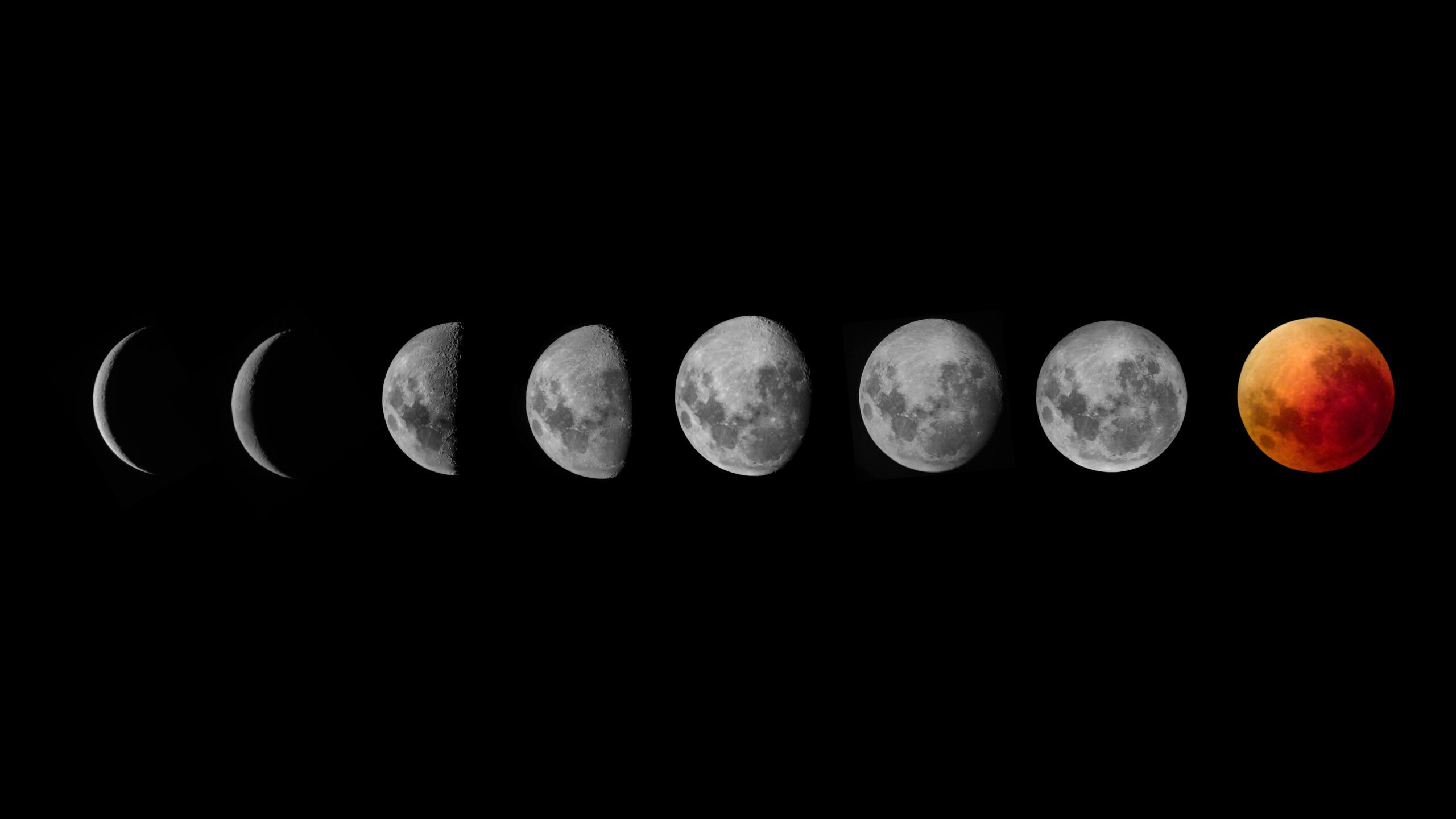
To understand this better, let’s talk about moon phases. If you look at the sky regularly, you will notice that the moon keeps changing its shape. Some nights it looks like a thin curve, sometimes half, and sometimes it becomes a bright full circle.
These changes are called moon phases. The main phases are new moon, crescent, half moon, gibbous, and full moon. After the full moon, the moon slowly becomes smaller again until it disappears, and then the cycle starts all over.
One complete cycle of these moon phases — from one new moon to the next new moon — takes about 29.5 days. This time period is called a lunar month.
Because it is not exactly 30 days, some lunar months are counted as 29 days and some as 30 days to keep the calendar balanced.
Now here is where the lunar year comes in. A lunar year is made up of 12 lunar months.
29.5 days × 12 months = about 354 days
That is why a lunar year has 354 days instead of 365 like the solar year. This difference of 11 days might not seem like a big deal at first, but over time it becomes very noticeable. Every year, festivals and important dates that follow the lunar calendar move about 10 to 11 days earlier on the regular calendar. This is the reason why Diwali, Eid, and many other celebrations never stay on the same date.
So when someone asks, what is lunar year, you can confidently say that it is a year that follows the moon’s natural rhythm — a calendar system that has guided human life for thousands of years and still shapes our traditions today.
How Is a Lunar Year Calculated?
Now that you know what is lunar year is, let’s understand how it is actually calculated in real life. The logic behind it is simple, but the effect it creates on our calendar is huge.
Length of One Moon Cycle
The moon does not change its shape randomly. It follows a fixed cycle called the lunar cycle. One complete cycle — from new moon to full moon and back to new moon — takes about 29.5 days. This is why some months in lunar calendars have 29 days and some have 30 days. The calendar alternates between them to stay close to the moon’s real movement.
This 29.5-day cycle is the foundation of the entire lunar calendar system.
Total Months in a Lunar Year
A lunar year is made by combining 12 lunar months.
29.5 days × 12 months = 354 days
That’s it. No extra calculations, no seasons involved. The year ends after 12 moon cycles, not after the Earth completes a round around the sun.
Why Lunar Years Are Shorter Than Solar Years
A solar year — the one we use normally — has about 365 days because it measures how long the Earth takes to orbit the sun.
Now compare:
- Solar year = 365 days
- Lunar year = 354 days
This means a lunar year is 11 days shorter than a solar year.
Because of this gap, every festival based on the lunar year comes 11 days earlier each year on the regular calendar. After about 3 years, the shift becomes more than a full month.
This is why sometimes Diwali is in October, sometimes in November, and sometimes Eid feels like it is coming way too early in the year.
Real-World Example: Tracking the Moon Month by Month.
Let’s imagine you start observing the moon on a new moon day. At the end of these 12 months, you will reach around 354 days. Meanwhile, the solar calendar would still have 11 more days left before completing the year.
| Lunar Month | New Moon Date | Length |
|---|---|---|
| Month 1 | Jan 1 | 29 days |
| Month 2 | Jan 30 | 30 days |
| Month 3 | Feb 28 | 29 days |
| Month 4 | Mar 29 | 30 days |
| Month 5 | Apr 28 | 29 days |
| Month 6 | May 27 | 30 days |
| Month 7 | Jun 26 | 29 days |
| Month 8 | Jul 25 | 30 days |
| Month 9 | Aug 24 | 29 days |
| Month 10 | Sep 22 | 30 days |
| Month 11 | Oct 22 | 29 days |
| Month 12 | Nov 20 | 30 days |
This simple tracking shows exactly how a lunar year slowly drifts away from the regular calendar — all because it listens only to the moon.
So when you understand how the moon moves, you automatically understand what is lunar year is and why it feels like time itself is shifting every year.
Lunar Year vs Solar Year – What’s the Difference?
Now that you clearly understand what is lunar year is, it becomes much easier to see why it feels so different from the regular calendar we use every day. The main difference is very simple: one follows the moon, the other follows the sun.
Let’s first look at the basic comparison.
| Feature | Lunar Year | Solar Year |
|---|---|---|
| Based on | Moon cycles | Earth’s revolution around the sun |
| Total days | 354 days | 365 days |
| Used in | Hindu, Islamic, Chinese calendars | Gregorian calendar (the calendar we use daily) |
At first glance, the difference of 11 days might not look like a big deal, but this small gap changes everything.
Why Solar Calendars Feel So “Fixed”
The solar year is built around something that never changes — the Earth’s journey around the sun. It always takes almost the same amount of time, which is why seasons stay in the same months every year.
January is always winter, April is always spring, and July always feels like peak summer.
Because of this stability, the Gregorian calendar feels reliable and predictable. You can plan birthdays, school terms, exams, vacations, and national holidays years in advance.
Your birthday doesn’t suddenly move to another season. This is why solar calendars feel fixed, structured, and steady.
Why Lunar Calendars Feel So “Floating”
Now compare this with the lunar year. Since it is based only on the moon, it ignores the sun completely. The moon finishes its cycle faster, so every lunar year ends 11 days earlier than the solar year.
This means lunar-based festivals slowly move backward through the seasons.
- One year, a festival may be in the summer.
- A few years later, it happens in the spring.
- After some time, the same festival might be in winter.
This movement makes the lunar calendar feel like it is floating. It is not locked to seasons. It drifts through the entire year, touching every month over time. That is why Eid sometimes comes in the heat of summer and sometimes during chilly winter mornings.
Which System Is Better?
There is no “better” or “worse” here — they simply serve different purposes.
- The solar year is perfect for civil life: schools, offices, farming seasons, and travel planning.
- The lunar year is perfect for spiritual, cultural, and traditional life, where the rhythm of nature — especially the moon — plays a central role.
So when someone asks what is lunar year is, you now know it is not just another calendar system. It is a completely different way of measuring time — one that listens to the moon instead of the sun, and that is exactly why it feels magical, moving, and alive.
Why Do Festival Dates Change Every Year?
One of the most common questions people ask is why festivals never stay on the same date. You mark Diwali on your calendar, and the next year it shows up almost two weeks earlier. Eid sometimes surprises everyone with a sudden announcement.
Chinese New Year can fall anytime between late January and mid-February. All of this confusion connects back to one simple idea: what is lunar year?
Most major Indian and Asian festivals are not fixed to the solar calendar. They are linked to the lunar year, which is shorter than the solar year by about 11 days. Because of this gap, festival dates move earlier every year when we look at them on the regular calendar.
Role of the Lunar Year in Indian Festivals
In the Hindu calendar, festivals are based on tithi — the lunar day — which is directly connected to the moon’s position. The months start with a new moon or a full moon, and special days are chosen based on moon phases, not on fixed dates like 10th March or 15th April.
That is why religious days are decided after checking the moon calendar each year, not by simply repeating last year’s dates.
Real Examples
Diwali is celebrated on the Amavasya (new moon) of the month of Kartik. Since Kartik is a lunar month, its starting point shifts every year. This is why Diwali sometimes falls in October and sometimes in November.
Eid is even more strongly tied to the lunar year. It depends on the sighting of the new moon that marks the end of Ramadan. Since the Islamic calendar is purely lunar and does not adjust to seasons, Eid moves about 11 days earlier every year.
Chinese New Year begins on the first new moon of the lunar calendar, usually between 21 January and 20 February. This wide range happens because it follows the moon, not the sun.
How Moon Sightings Affect Dates
In many traditions, especially in the Islamic calendar, festival dates are not finalized until the moon is actually seen in the sky. Weather, clouds, and visibility can all delay or confirm a celebration. That is why sometimes different countries celebrate the same festival on different days.
So the next time someone wonders why festival dates feel unpredictable, you can confidently explain what is lunar year is — and how the moon quietly decides when the celebrations begin.
What Is a Leap Month in Lunar Year?
By now, you understand what is lunar year is and why it is shorter than the solar year. But this creates a big problem. If a lunar year is always 11 days shorter, then over time, festivals will slowly move across all seasons. Imagine celebrating harvest festivals in winter or spring festivals during peak summer — it would completely disturb the connection between culture and nature. That is why the lunar calendar needs an adjustment system.
This adjustment comes in the form of a leap month, known in the Hindu calendar as Adhik Maas.
Why the Lunar Calendar Needs Adjustment
Every year, the lunar calendar loses about 11 days compared to the solar calendar.
After 3 years:
11 days × 3 = 33 days
That is more than one full lunar month.
So instead of allowing festivals to drift too far away from their natural season, an extra month is added every 2.5 to 3 years to balance things. This keeps the lunar calendar in sync with the sun and seasons.
Meaning of Adhik Maas
The word Adhik means extra or additional, and Maas means month. So Adhik Maas literally means extra month.
It is not a random decision. It is inserted only when there is no movement of the sun into a new zodiac sign during a lunar month. When this happens, that month is declared as Adhik Maas and is repeated.
How Adhik Maas Aligns the Lunar Year with Seasons
By adding this extra month, the lunar calendar catches up with the solar calendar. The missing 33 days are compensated in one go, pulling festival dates back toward their correct seasonal position.
Without Adhik Maas:
- Diwali could slowly move into summer
- Holi might shift into autumn
- Agricultural and seasonal rituals would lose meaning
With Adhik Maas:
- Festivals remain close to the seasons they belong to
- Cultural and religious balance is preserved
This is the genius of the ancient calendar system. Long before modern science, people figured out how to solve the time gap between the moon and the sun.
Cultural Impact of Adhik Maas
Adhik Maas is considered spiritually important but not suitable for celebrations like weddings or housewarming. Instead, people focus on prayer, reflection, charity, and reading holy texts.
Many families treat this month as a time for inner growth rather than external celebration. Temples remain busy, but marriage halls stay quiet.
So while it may sound like a small technical fix, Adhik Maas plays a huge role in keeping traditions meaningful. It ensures that the answer to what is lunar year is not just about counting days — it is about protecting the rhythm of culture itself.
Lunar Year in Different Cultures
To truly understand what is lunar year is, it helps to see how different cultures around the world use it in their daily and spiritual life. Even though the moon is the same everywhere, each tradition has its own beautiful way of following it.
Hindu Lunar Calendar
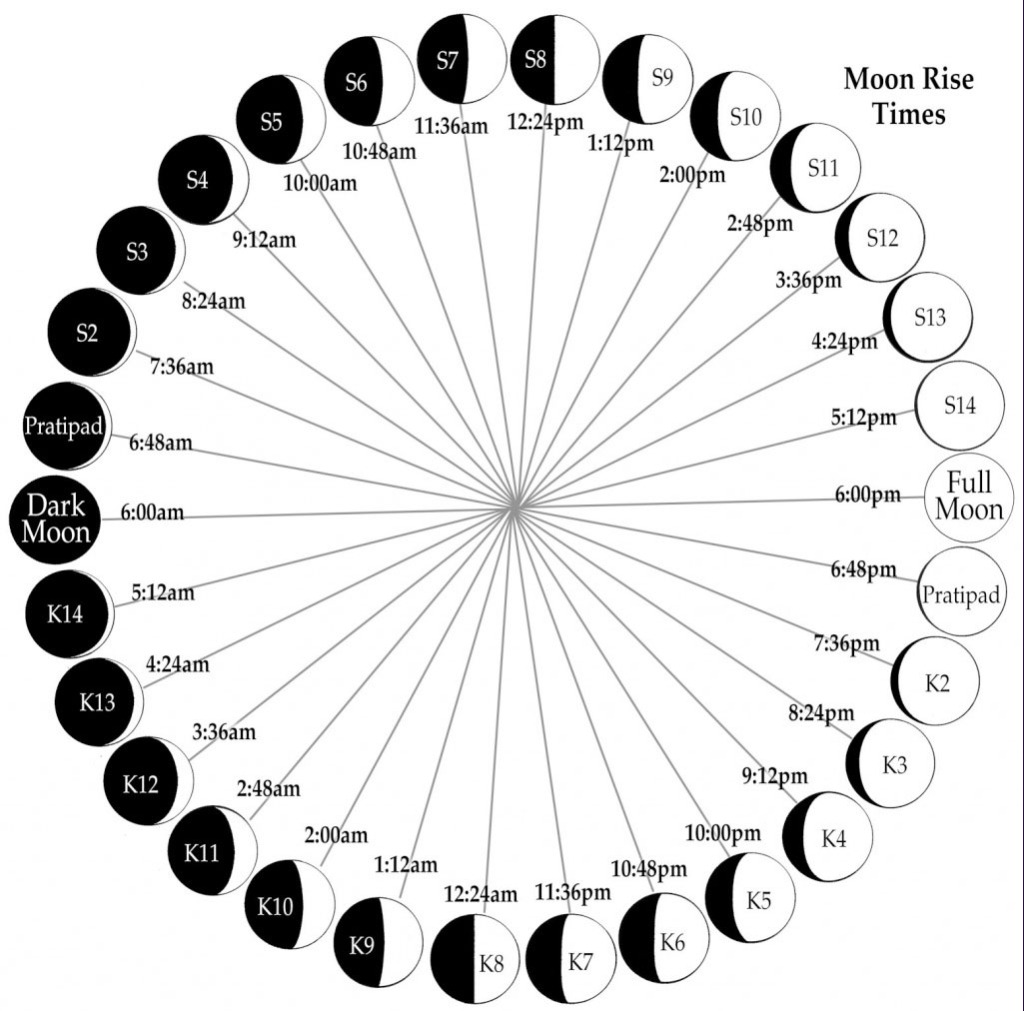
The Hindu calendar is a mix of science, tradition, and observation. It does not simply count days — it tracks the exact position of the moon.
Tithi System
A tithi is not a regular 24-hour day. It is the time the moon takes to move 12 degrees away from the sun. Because the moon does not move at a constant speed, some tithis are shorter and some are longer. This is why festival timings sometimes change even within the same date.
Every Hindu festival is decided by tithi, not by date. That is why two people in different cities may celebrate the same festival on slightly different days.
Paksha System
Each lunar month is divided into two halves called Paksha:
- Shukla Paksha – from new moon to full moon (waxing moon)
- Krishna Paksha – from full moon to new moon (waning moon)
Most festivals are linked to specific tithis within these Pakshas. For example, Diwali comes on the Amavasya (new moon) of the Kartik month.
Islamic Lunar Calendar

The Islamic calendar is a pure lunar calendar. It does not use any leap month like the Hindu system. Because of this, Islamic festivals move across all seasons over time.
Moon Sighting Rules
Each new month begins only after the new crescent moon is physically sighted in the sky. This is why the exact date of Ramadan or Eid is sometimes announced just a day before.
Different countries may begin the same month on different days depending on moon visibility, weather, and local rulings.
Ramadan Example
Ramadan is the ninth month of the Islamic lunar year. Since the lunar year is shorter, Ramadan moves about 11 days earlier every year. Over a lifetime, a person may experience fasting in every season — summer heat, winter cold, and everything in between.
Chinese Lunar Calendar
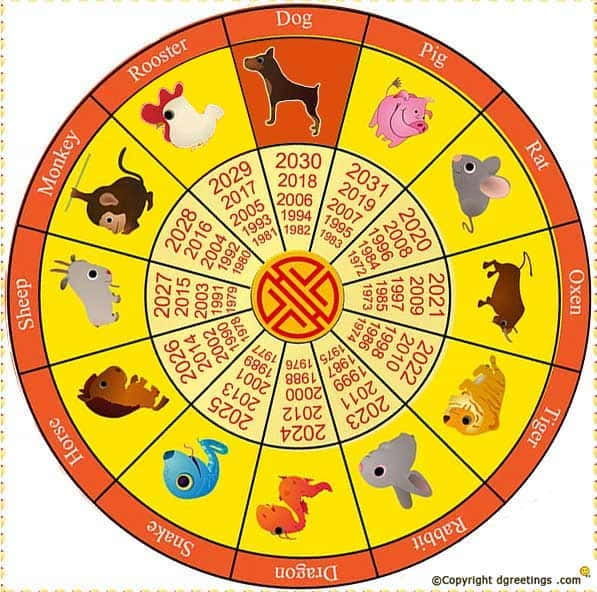
The Chinese calendar follows a lunisolar system, meaning it considers both the moon and the sun.
Zodiac Animals
Each lunar year is linked to one of the twelve zodiac animals, like the Dragon, the Tiger, the Rabbit, and so on. These animals are believed to influence personality traits and fortune.
New Year System
Chinese New Year begins on the first new moon between January 21 and February 20. It is the most important festival in Chinese culture and is celebrated for 15 days, ending with the Lantern Festival.
A leap month is added to keep the calendar aligned with seasons, just like Adhik Maas.
So when someone asks what is lunar year is, remember — it is not one system but many beautiful traditions all listening to the same moon.
Why Did Ancient People Trust the Moon More Than the Sun?
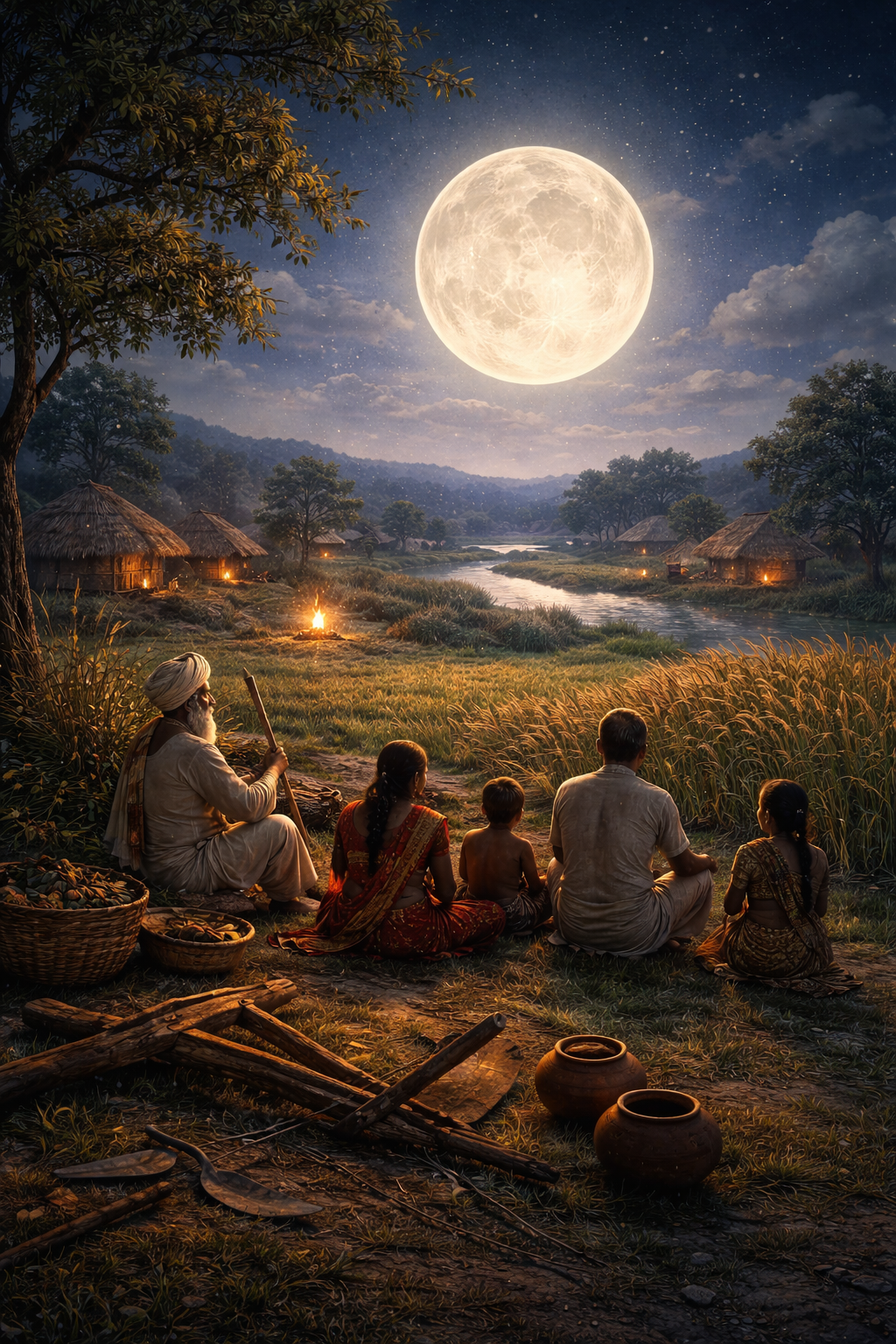
Today we depend on clocks, smartphones, and calendars to tell us the date and time. But thousands of years ago, people had none of these things. There were no clocks, no mobile apps, no printed calendars — yet life still needed structure.
People had to decide when to plant crops, when to harvest, when to hold festivals, and when to observe religious days. This is where the moon became their most trusted guide.
Unlike the sun, which looks almost the same every day, the moon changes its shape clearly every night. Anyone, anywhere, could look up at the sky and instantly know what part of the month it was.
Even without education, tools, or writing, people could track time simply by observing the moon. This is one of the biggest reasons why the idea of what is lunar year is was born.
Another reason the moon was trusted is visibility. The sun can be painful to look at and is only visible during the day. But the moon lights up the night sky gently. Farmers working late, travelers on long journeys, and villagers gathering after sunset could all rely on the moon without any special equipment. It was nature’s own calendar, freely available to everyone.
The moon was also deeply connected to agriculture. Ancient farmers noticed patterns — certain moon phases were better for sowing seeds, while others were linked to harvesting.
Tides in coastal regions followed the moon, and people slowly understood that the moon influenced water, soil, and growth cycles. Over time, planting and harvesting schedules were shaped around lunar months.
The moon also gave people a sense of rhythm. Life felt more balanced when it followed a visible, repeating pattern. Full moon nights became times for gathering, prayer, and celebration. New moon nights were moments of rest and reflection.
So when you think about what is lunar year is, remember that it is not just a calendar system. It is a reminder of how deeply humans once lived in harmony with the sky — long before machines, when the moon itself was the most reliable clock in the world.
Is Lunar Year Still Relevant Today?
With all the technology around us — smartwatches, apps, AI reminders — it might feel like the lunar year should be outdated by now. But surprisingly, the concept of what is lunar year is still very much alive, even in 2026.
Open any modern calendar app, and you will notice that it still shows full moon, new moon, and important lunar events. This is not just for decoration. Millions of people across the world still plan their lives around these moon phases. From deciding festival dates to choosing religious fasts, the lunar year quietly continues to guide human routines.
Religion is one of the biggest reasons the lunar year remains relevant. In Hindu traditions, tithis and pakshas are still used to decide auspicious days. In Islam, months begin only after the moon is sighted, making lunar observation a living practice even today. Chinese families still welcome the new year based on the lunar calendar, not the solar one.
Astrology also keeps the lunar year alive. The moon is believed to influence emotions, moods, and personal energy. Many people check moon calendars before making big decisions, starting new projects, or performing spiritual rituals.
But relevance is not only spiritual — it is emotional too. The moon connects people to something bigger than daily routines. Watching a full moon rise still feels special, even in a world of screens and notifications.
So while we may no longer need the moon to tell time, it still tells us when to celebrate, reflect, fast, and begin again. That is the real power behind what is lunar year — it is not about replacing modern calendars, but about reminding us that time was once measured by looking up, not down at a device.
Common Myths About Lunar Year
Even though the idea of the lunar year has existed for thousands of years, many people still misunderstand it. Let’s clear up some of the most common myths about what is lunar year is.
“The lunar calendar is outdated.”
This is completely false. Just because something is ancient does not mean it is useless. The lunar calendar is still actively used by millions of people across the world. Religious festivals, fasting days, spiritual rituals, and cultural celebrations are still decided using lunar dates. In fact, most digital calendars today automatically include moon phases, proving that the system is very much alive.
The lunar year is not outdated — it simply serves a different purpose than the solar calendar
“All countries follow the solar calendar.”
While the Gregorian solar calendar is used officially for global communication, that does not mean it is the only calendar in practice. Many countries and communities use multiple calendars at the same time. A person may use the solar calendar for office work and the lunar calendar for religious life. So it is wrong to think that the whole world has moved away from lunar systems.
“Moon sighting is unscientific.”
People often think that waiting to see the moon is old-fashioned or unreliable. In reality, moon sighting is based on astronomy. The moon’s position, angle, and visibility are carefully calculated. Weather conditions may affect visibility, but the process itself is scientific and precise.
So when someone asks what is lunar year is, remember — it is not superstition, it is a system rooted in observation, science, and human history.
Conclusion – Why the Moon Still Runs Our Calendar
So, after understanding the moon cycles, the shifting festival dates, the leap month, and how different cultures follow the lunar system, the question what is lunar year is no longer feels complicated. It is simply a way of measuring time based on the moon — a method that humans have trusted for thousands of years.
A lunar year has around 354 days, which makes it shorter than the solar year we use every day. This small difference is the reason why festivals like Diwali, Eid, and Chinese New Year never fall on the same date twice. It also explains why special adjustments like Adhik Maas exist, so that the lunar calendar stays connected to the seasons.
Even in 2026, when we live in a world ruled by digital calendars, smart assistants, and AI reminders, the lunar year still quietly shapes our lives. We may not look at the sky to tell the time anymore, but we still wait for moon sightings, check tithis, and feel the magic of a full moon night. Religion, culture, astrology, and tradition continue to depend on the lunar rhythm.
So when someone asks what is lunar year is and why it matters, the answer is simple: it matters because it keeps us connected to nature. It reminds us that time is not only numbers on a screen — it is also the soft glow of the moon rising in the evening sky, just like it did for our ancestors centuries ago.
