How did Christmas begin? Every year, more than 2 billion people across over 160 countries celebrate Christmas in one form or another, making it one of the most widely observed festivals in the world.
From glowing Christmas trees in Europe to midnight Mass in the Vatican and festive markets in Asia, Christmas has grown far beyond its religious roots.
But have you ever paused to ask, How did Christmas begin? in a way that connects the past with the joy we feel today?
Christmas is celebrated worldwide because its message is universal. At its heart, the festival symbolizes hope, peace, generosity, and togetherness—values that resonate across cultures and generations.
While Christmas marks the birth of Jesus Christ in Christian tradition, many of its customs—such as feasting, gift-giving, and decorating homes—have evolved to embrace people of all faiths.
This blend of spiritual meaning and cultural celebration is one of the key reasons Christmas has become a global event rather than a regional or religious one.
Understanding its origins adds a deeper layer of meaning to the festival. When we explore How did Christmas begin?, we discover that Christmas did not appear overnight.
It was shaped over centuries, influenced by ancient winter festivals, early Christian practices, and historical events like the rise of the Roman Empire.
Knowing this history helps us appreciate why we celebrate on December 25, why light plays such an important role during the darkest time of the year, and how old traditions slowly transformed into modern customs.
In this brief history, we’ll explore where Christmas truly began, how ancient traditions influenced it, and how it evolved into the global celebration we know today.
By the end, How did Christmas begin? will feel less like a distant historical question and more like a meaningful story—one that connects ancient beliefs, human emotions, and the joy of celebrating together.
Read Also: 10 Best Places in the World to Celebrate Christmas (2025 Edition)
How did Christmas begin? in Ancient Times
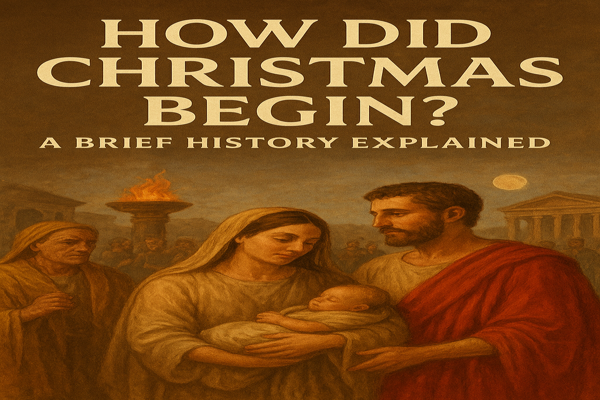
Long before Christianity, ancient civilizations celebrated the winter solstice, around December 21, marking the return of longer days and renewed hope. These festivals honored light, survival, and the promise of warmer seasons, forming an early foundation when exploring How did Christmas begin?.
Pagan festivals like Saturnalia in Rome and Yule in Northern Europe included feasting, gift-giving, lighting candles, and decorating with greenery. These celebrations brought joy and unity during harsh winters and strongly influenced later traditions.
As Christianity spread in the 4th century, many of these customs were adapted rather than removed. Evergreen trees, candles, wreaths, and communal feasts became part of Christmas, showing how ancient traditions shaped modern celebrations and helping answer How did Christmas begin?.
How Did Christmas Begin? Through the Birth of Jesus

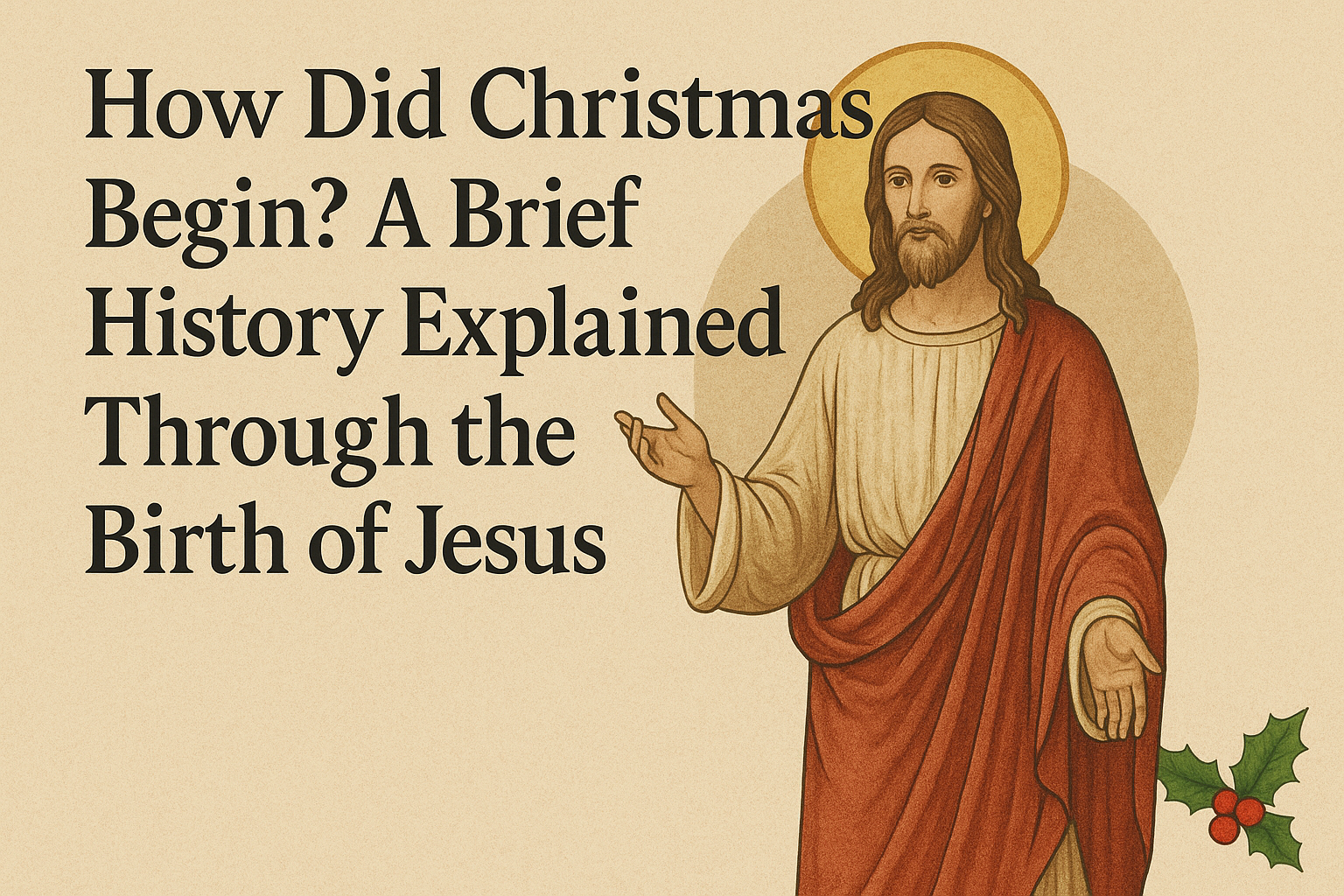
The biblical accounts of Jesus Christ’s birth come mainly from the Gospels of Matthew and Luke, which describe his birth in Bethlehem to Mary and Joseph.
These narratives emphasize humility, hope, and salvation, forming the spiritual core when we explore How did Christmas begin?.
Interestingly, the Bible does not mention an exact date for Jesus’ birth. December 25 was chosen in the 4th century, likely to align with existing winter solstice festivals, making it easier for people to embrace Christianity while retaining familiar seasonal celebrations.
Early Christian communities played a crucial role in shaping Christmas. By combining faith with local customs, they helped spread the celebration across the Roman Empire, gradually transforming the remembrance of Christ’s birth into a unified festival—an essential part of understanding How did Christmas begin?.
How Did Christmas Begin? A Brief History Explained During the Roman Era
The Roman Empire’s adoption of Christmas in the 4th century allowed the festival to spread widely, as Christianity became a legally accepted religion. This shift helped transform Christmas into a public celebration, central to How Did Christmas Begin? A Brief History Explained.
Emperor Constantine played a vital role by legalizing Christianity in 313 AD, giving Christians the freedom to celebrate openly. His support helped Christian festivals gain social and political acceptance across the empire.
During this period, pagan winter festivals were gradually adapted into Christian traditions. Customs from Saturnalia and solstice celebrations were reinterpreted to honor Christ’s birth, explaining How Did Christmas Begin? A Brief History Explained through cultural blending.
How Did Christmas Begin? A Brief History Explained in the Middle Ages
In medieval Europe, Christmas became one of the most important religious festivals of the year, celebrated by kings, clergy, and common people alike. The season often lasted 12 days, filled with prayer, music, and community gatherings, adding depth to How Did Christmas Begin? A Brief History Explained.
Church rituals played a central role, with midnight Mass, elaborate ceremonies, and large public feasts. Villages came alive with markets, shared meals, and charity for the poor, reinforcing Christmas as a time of unity and generosity.
During this era, Christmas carols and nativity plays began to emerge as storytelling tools. Sung in local languages and performed in public spaces, they helped ordinary people understand the story of Christ’s birth—further shaping How Did Christmas Begin? A Brief History Explained through art and tradition.
How Did Christmas Begin? A Brief History Explained Through Modern Traditions
The modern image of Santa Claus evolved from St. Nicholas, a 4th-century bishop known for secret gift-giving, later blended with European folklore. Christmas trees, inspired by German traditions, and the custom of exchanging gifts gradually became central symbols—key examples in How Did Christmas Begin? A Brief History Explained.
Victorian England, especially during Queen Victoria’s reign in the 19th century, shaped many traditions we recognize today. The royal family popularized decorated Christmas trees, greeting cards, and family-centered celebrations, giving Christmas a warm, homely character.
As European influence spread through trade and colonization, Christmas customs traveled worldwide. Local cultures adapted these traditions, turning Christmas into a global celebration and completing the story of How Did Christmas Begin? A Brief History Explained in the Modern World.
How Did Christmas Begin? A Brief History Explained Across Different Cultures
Today, Christmas is celebrated in over 160 countries, each adding its own cultural flavor to the festival. While the core message remains the same, traditions vary widely—highlighting how How Did Christmas Begin? A Brief History Explained continues to evolve across borders.
In Europe, Christmas markets, carol singing, and festive feasts dominate the season. Across Asia, countries like Japan and South Korea celebrate Christmas as a cultural and social event, often focusing on lights, cakes, and gift-giving rather than religious rituals. In the Americas, especially the U.S. and Latin America, Christmas blends church traditions with family gatherings, parades, and music.
This blending of local customs with Christmas traditions makes the festival truly global. From tropical beach celebrations to snowy village markets, each culture adapts Christmas in its own way—perfectly reflecting How Did Christmas Begin? A Brief History Explained as a story of shared joy shaped by human diversity.
How did Christmas begin? in Today’s World
Today, Christmas is celebrated in both religious and secular ways. For Christians, it remains a sacred festival marking the birth of Jesus Christ, while for many others, it is a cultural holiday centered on family, joy, and togetherness—an evolution clearly seen in How did Christmas begin?.
Over time, Christmas has also become highly commercialized, with global spending exceeding $1 trillion annually on gifts, decorations, and travel. While commercialization has shifted focus toward shopping and entertainment, it has also helped spread Christmas traditions worldwide.
Despite these changes, Christmas continues to hold deep emotional and cultural value. Acts of kindness, family reunions, and shared traditions keep its spirit alive, proving that the heart of Christmas remains strong—just as shown in How did Christmas begin?.
How did Christmas begin? During the Roman Era
The Roman Empire’s adoption of Christmas in the 4th century allowed the festival to spread widely, as Christianity became a legally accepted religion. This shift helped transform Christmas into a public celebration, central to How did Christmas begin?.
Emperor Constantine played a vital role by legalizing Christianity in 313 AD, giving Christians the freedom to celebrate openly. His support helped Christian festivals gain social and political acceptance across the empire.
During this period, pagan winter festivals were gradually adapted into Christian traditions. Customs from Saturnalia and solstice celebrations were reinterpreted to honor Christ’s birth, explaining How did Christmas begin? through cultural blending.
How did Christmas begin? in the Middle Ages
In medieval Europe, Christmas became one of the most important religious festivals of the year, celebrated by kings, clergy, and common people alike. The season often lasted 12 days, filled with prayer, music, and community gatherings, adding depth to How did Christmas begin?.
Church rituals played a central role, with midnight Mass, elaborate ceremonies, and large public feasts. Villages came alive with markets, shared meals, and charity for the poor, reinforcing Christmas as a time of unity and generosity.
During this era, Christmas carols and nativity plays began to emerge as storytelling tools. Sung in local languages and performed in public spaces, they helped ordinary people understand the story of Christ’s birth—further shaping How did Christmas begin? through art and tradition.
How did Christmas begin? Through Modern Traditions
The modern image of Santa Claus evolved from St. Nicholas, a 4th-century bishop known for secret gift-giving, later blended with European folklore. Christmas trees, inspired by German traditions, and the custom of exchanging gifts gradually became central symbols—key examples in How did Christmas begin?.
Victorian England, especially during Queen Victoria’s reign in the 19th century, shaped many traditions we recognize today. The royal family popularized decorated Christmas trees, greeting cards, and family-centered celebrations, giving Christmas a warm, homely character.
As European influence spread through trade and colonization, Christmas customs traveled worldwide. Local cultures adapted these traditions, turning Christmas into a global celebration and completing the story of How did Christmas begin? in the Modern World.
How did Christmas begin? Across Different Cultures
Today, Christmas is celebrated in over 160 countries, each adding its own cultural flavor to the festival. While the core message remains the same, traditions vary widely—highlighting how How did Christmas begin? continues to evolve across borders.
In Europe, Christmas markets, carol singing, and festive feasts dominate the season. Across Asia, countries like Japan and South Korea celebrate Christmas as a cultural and social event, often focusing on lights, cakes, and gift-giving rather than religious rituals. In the Americas, especially the U.S. and Latin America, Christmas blends church traditions with family gatherings, parades, and music.
This blending of local customs with Christmas traditions makes the festival truly global. From tropical beach celebrations to snowy village markets, each culture adapts Christmas in its own way—perfectly reflecting How did Christmas begin? as a story of shared joy shaped by human diversity.
How did Christmas begin? in Today’s World
Today, Christmas is celebrated in both religious and secular ways. For Christians, it remains a sacred festival marking the birth of Jesus Christ, while for many others, it is a cultural holiday centered on family, joy, and togetherness—an evolution clearly seen in How did Christmas begin?.
Over time, Christmas has also become highly commercialized, with global spending exceeding $1 trillion annually on gifts, decorations, and travel. While commercialization has shifted focus toward shopping and entertainment, it has also helped spread Christmas traditions worldwide.
Despite these changes, Christmas continues to hold deep emotional and cultural value. Acts of kindness, family reunions, and shared traditions keep its spirit alive, proving that the heart of Christmas remains strong—just as shown in How did Christmas begin?.
Conclusion: How did Christmas begin?
In summary, Christmas has a rich and layered history, blending ancient pagan festivals, biblical accounts of Jesus’ birth, and centuries of evolving traditions. From Saturnalia and Yule to church rituals, carols, and modern customs, understanding its journey answers the question: How did Christmas begin?.
Christmas remains meaningful today because it connects people across generations and cultures, offering a time for reflection, generosity, and celebration. Its values of hope, love, and togetherness continue to resonate, whether in religious observance or secular festivities.
Ultimately, Christmas is a celebration of tradition, faith, and human connection. By exploring its origins and evolution, we gain a deeper appreciation for its enduring charm, showing that How did Christmas begin? is more than history—it’s a story that continues to inspire joy worldwide.
