The Reagan Airport wing clipping is an evidence puzzle, not yet a finished account of what went wrong. Federal investigators are examining an alleged contact between two American Airlines planes on the ground at Ronald Reagan Washington National Airport. The Independent reports, citing CNN, that the incident happened on a Friday and that no injuries were reported.
The initial picture is straightforward but incomplete. According to the report, one aircraft was taxiing for a flight to Dallas, while the other was next in line on the tarmac. Radio exchanges give a glimpse of how the event was communicated: after a controller instructed flight 638 to hold short of runway 19, a pilot reported being slightly over the hold-short line and said the aircraft had “swapped paint” with another American plane. In a separate exchange, a pilot said the other aircraft had been clipped.
Those transmissions are useful evidence, but they are not a complete reconstruction. They convey what participants reported over the radio; they do not, by themselves, establish the precise positions of both aircraft, the sequence of movements, or the cause of the contact. The report also says the audio indicated that a winglet broke off one plane, but it does not provide a full inspection record or a final investigative finding.
American Airlines said both aircraft were removed from service for inspection, according to The Independent. That response tells readers what the airline did after the incident, not what investigators will ultimately conclude. The source does not give a specific calendar date for the Friday event, a complete damage assessment, or an explanation of responsibility.
Separating those layers matters: a pilot’s radio report, an airline’s operational statement and investigators’ conclusions answer different questions. Until more evidence is released, the clearest account is that contact was reported, inspections followed and federal investigators are examining the event. For another look at the limits of aviation data, see this guide to flight-tracking evidence and emergency signals, and visit 360techupdates.com for more technology coverage.
What Happened to the American Airlines Planes?
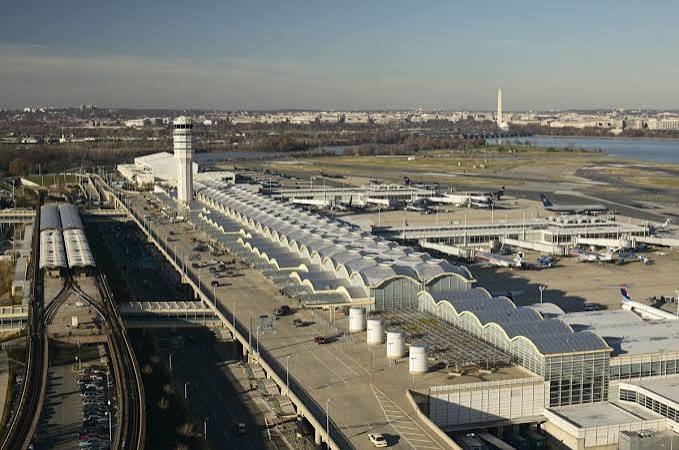
The Reagan Airport wing clipping involved two American Airlines planes on the ground at Ronald Reagan Washington National Airport. One was taxiing for takeoff to Dallas, while the other was next in line on the tarmac. No injuries were reported, according to The Independent’s account, which cited CNN’s reporting.
Air traffic control audio adds detail to that sequence, although it does not establish a cause. After a controller instructed a pilot to hold short of a runway, the pilot said the aircraft was slightly over the hold-short line and had “swapped paint” with an American plane described as behind or next to it. That phrase is the pilot’s description of contact, not a finding about how it occurred.
In another exchange, a tower operator told a pilot that the airline thought the aircraft might have been clipped. The pilot responded that it had been. The reported audio also indicated that a winglet, the outermost part of a wing, broke off one of the aircraft. The account does not identify which plane lost it or provide a complete assessment of the damage to either aircraft.
American Airlines said both aircraft were removed from service for inspection. That is the airline’s reported response; the source does not say what the inspections found, how long either plane remained out of service or what arrangements were made for passengers.
The report says the incident happened on a Friday, but it does not provide a calendar date. It also does not identify the aircraft types or give a confirmed cause. Federal aviation investigators were working to determine whether the planes clipped wings, according to the story. The audio describes what participants said around the incident, but it should not be treated as a completed investigation or used to assign responsibility.
Those limits matter when reconstructing what happened to the American Airlines planes: the Dallas-bound aircraft was taxiing, another was next in line, contact was reported, and both were taken out of service for inspection. Readers looking for more technology and travel coverage can also visit 360 Tech Updates.
Reagan Airport Wing Clipping: Reading the Radio Audio
The radio exchange provides an immediate account of the Reagan Airport wing clipping, but it is not a complete reconstruction. As The Independent reported, citing CNN’s account of air traffic control audio, a controller told flight 638 to hold short of runway 19. The pilot replied that the aircraft was slightly over the hold-short line and had “swapped paint” with another American aircraft described as behind or next to it.
A hold-short instruction tells a crew not to proceed beyond the designated boundary for the runway. The pilot’s acknowledgment gives investigators a position to examine, but it does not, by itself, establish where the contact occurred or whether crossing the line caused it. The reported exchange also does not show every movement or communication before the incident.
In another exchange, a tower operator asked flight 2152 whether the company believed it had been clipped. A pilot confirmed that it had. The Independent also reported that the audio indicated a winglet had broken off one aircraft. A winglet is a feature at the end of a wing; the reported account does not identify which plane lost it or describe the full extent of the damage.
What the exchange supports: pilots reported contact involving the two American Airlines planes, and the audio relayed an apparent winglet loss. The Independent reported that one aircraft was taxiing for a Dallas departure and the other was next in line. It also said no injuries were reported and that American Airlines removed both aircraft from service for inspection.
What remains unresolved: the quoted audio does not establish the aircrafts’ exact paths, the timing of the contact relative to each instruction, or which crew or other factor was responsible. The FAA is investigating, according to the report. Radio calls can help investigators frame questions, but a finding about cause would require a fuller review than the reported snippets provide.
For more aviation and travel coverage, visit the 360 Tech Updates homepage. The distinction matters for travelers reading early reports: a pilot’s observation is valuable evidence, but it should not be mistaken for a final investigative conclusion.
American Airlines Planes and the Limits of Digital Evidence
The Independent’s account of the Reagan Airport wing clipping offers a starting point, not a complete reconstruction. The reported radio audio captures pilots describing contact between two American Airlines planes, but a conversation after an event cannot by itself establish precisely how the aircraft came together.
According to the report, one aircraft was taxiing for a Dallas departure and the other was next in line. A pilot told the controller that the first aircraft was slightly over the hold-short line and had “swapped paint” with the American plane nearby. In a separate exchange, another pilot confirmed being clipped. The report also says the audio indicated that a winglet broke off. These are important contemporaneous accounts, though they are not a substitute for a full physical and operational assessment.
What might investigators look for? The source confirms an FAA investigation, but does not identify additional records or say which ones are under review. If available, several kinds of evidence could help answer different questions:
- Radio recordings: A fuller sequence could help establish what instructions and responses preceded the reported contact. It would still need to be interpreted alongside what crews could see and where their aircraft were positioned.
- Ground-position data: Available tracking or airport-surface records might help reconstruct movements and timing. Their usefulness would depend on coverage, accuracy and how closely the timestamps align with other evidence; plotted positions alone may not show wingtip clearance.
- Surveillance footage: If a camera captured the relevant area, video might show the planes’ relative movement. Viewing angle, obstructions and image quality could limit what it can prove about the point of contact.
American Airlines said both aircraft were removed from service for inspection, according to the Independent. That decision addresses a separate practical question: whether the planes were fit to fly. Inspection findings could potentially be compared with the pilots’ accounts and any available recordings, but the source does not report those findings or a final cause.
For a related discussion of the limits of aviation data, see the BA239 emergency and flight-tracking analysis. More technology coverage is available at 360 Tech Updates.
Reagan Airport Wing Clipping: What Inspection Can Clarify
The Reagan Airport wing clipping account begins with radio audio, not a published inspection report. According to The Independent’s report, which cites CNN, the audio includes a pilot saying the aircraft had made contact with another plane. A subsequent exchange also conveyed that a winglet had broken off one of the aircraft. Those statements are important initial evidence, but they do not describe the full extent of any damage.
The story says the incident involved two American Airlines planes at Ronald Reagan Washington National Airport. One was taxiing for takeoff on a flight to Dallas, while the other was next in line on the tarmac. No injuries were reported, according to the source. American Airlines said both aircraft were removed from service for inspection, and federal aviation investigators were working to determine what happened.
Inspection can help turn an immediate account into a more complete physical picture. The reported broken winglet is a specific piece of information, but it does not establish whether damage was confined to that part or whether either aircraft had damage elsewhere. Findings identifying the affected aircraft and describing the condition of each plane would provide more clarity than the radio exchange alone.
Two questions remain open in the source:
- What was the full extent of damage to each aircraft? The story reports the broken winglet but does not provide inspection results or a complete damage assessment.
- When did each aircraft return to service? The airline confirmed that both were taken out of service for inspection, but the story supplies no return-to-service time for either plane.
Removal for inspection is a reported action, not a public finding about what inspectors ultimately discovered. Likewise, the audio records what people said close to the event; it should not be treated as a substitute for a completed assessment. Readers should look for an airline or investigative update that distinguishes the condition of one aircraft from the other.
For more technology and travel coverage, visit 360techupdates.com. Until further findings are available, the distinction is straightforward: contact and a broken winglet were reported, while the complete damage picture and both aircrafts’ return-to-service dates remain unanswered in the source story.
American Airlines Planes, Traveler Updates and Wider Context
For travelers, the immediate question after the Reagan Airport wing clipping is whether their own itinerary has changed. The available report does not establish specific delays, cancellations or passenger entitlements. It does, however, say that both American Airlines planes were taken out of service for inspection, making airline updates the best starting point for anyone concerned about a booking.
According to The Independent’s account, no injuries were reported. One aircraft was taxiing for a flight to Dallas, while the other was next in line on the tarmac. The report says the Federal Aviation Administration is investigating the alleged contact; it does not provide a final finding about how it happened.
Travelers who think their trip may be affected can take a few practical steps without assuming that a disruption has occurred:
- Check flight status: Look up the flight number in the airline’s app or on its website, and check again before leaving for the airport.
- Review messages: Watch for airline notifications about a schedule or aircraft change, and make sure the contact information on the booking is current.
- Consider rebooking options: If the airline reports a change, review the options offered for that particular reservation before selecting an alternative.
- Ask about the fare rules: Policies and available remedies can depend on the ticket and circumstances. Confirm the terms directly rather than assuming a free change or compensation applies.
For a related planning resource, see this guide on changing an American Airlines flight. Travelers can also browse 360techupdates for more coverage.
The Independent separately recalls the collision near Reagan Airport on January 29, 2025, when an American Eagle jet and a U.S. Army Black Hawk helicopter collided over the Potomac River. The report says all 67 people aboard the two aircraft were killed. That tragedy is important context for public concern about aviation safety, but no connection to the wing-clipping investigation has been established.
The distinction matters: an earlier fatal collision does not explain the later ground incident, and reported radio exchanges are not a substitute for investigators’ findings. Until more information is released, passengers should treat operational updates and the cause of the contact as separate questions.
Conclusion: Reagan Airport Wing Clipping Key Takeaways
The Reagan Airport wing clipping involved two American Airlines planes on the ground at Ronald Reagan Washington National Airport. The Independent, citing CNN’s reporting, said no injuries were reported. One aircraft was taxiing for a flight to Dallas, while the other was next in line on the tarmac.
Air traffic control audio adds detail to that account, but it is not a complete reconstruction. According to the reported exchange, a pilot said the aircraft was slightly over a hold-short line and had made contact with another American plane. In a separate exchange, another pilot confirmed that the aircraft had been clipped. The audio also described a winglet breaking off one of the planes.
The immediate response was to remove both aircraft from service for inspection, according to American Airlines, as reported by The Independent. That is an important distinction: the reported inspection followed the contact, but the source does not provide its results or establish the full extent of the damage. It also does not say when either aircraft returned to service.
- What is reported: Two American Airlines planes were involved, a winglet was described as broken, and no injuries were reported.
- What the audio offers: Participants’ immediate descriptions of contact and aircraft position, not a final explanation of how the incident developed.
- What remains open: Federal aviation investigators were still examining the incident. The source does not establish a cause or assign fault to a pilot, controller or airline.
Those limits matter when interpreting a short recording. A statement made over the radio can help identify what crews noticed at the time, but it does not by itself resolve every question about aircraft movements, clearances or contributing circumstances. The reported lack of injuries is reassuring, while the decision to inspect both planes shows that the airline took the reported contact seriously.
For more technology and travel coverage on 360techupdates.com, readers can follow the broader reporting. For this incident, check for official updates from aviation investigators and American Airlines rather than treating early audio as the final account.
